
Navigating a Multipolar World: The Evolution of Alliances and Global Power Dynamics
Summary
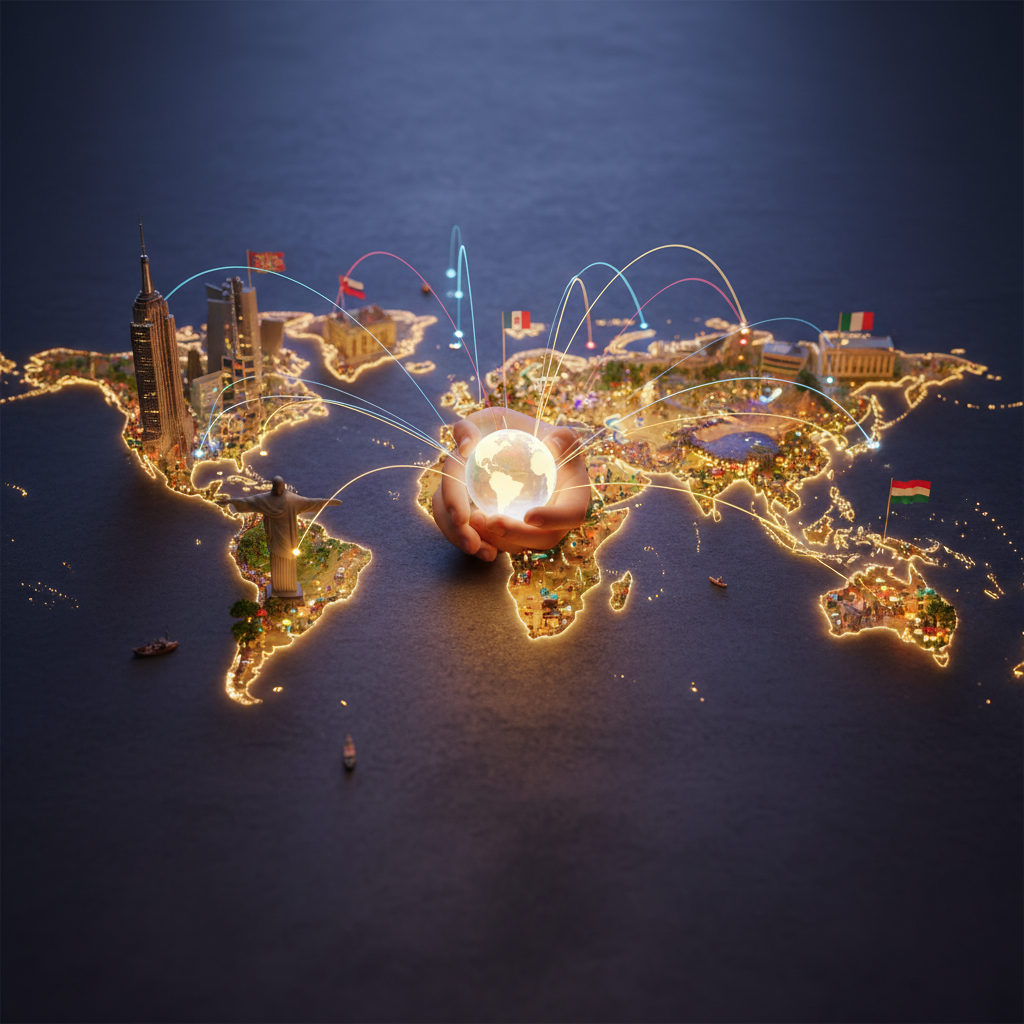
Navigating a Multipolar World: The Evolution of Alliances and Global Power Dynamics explores the transformation of the international system from historically dominant unipolar or bipolar orders toward a complex multipolar landscape characterized by multiple influential states and coalitions. Multipolarity refers to a global structure in which power is distributed among several significant actors rather than concentrated in one or two superpowers. This shift reshapes the nature of alliances, diplomacy, and global governance, presenting both opportunities for flexible cooperation and challenges of increased rivalry and instability.
Historically, multipolarity has defined many international eras, such as the early modern European balance-of-power system and the interwar period, where multiple great powers engaged in shifting alliances to maintain equilibrium. The 20th century’s Cold War introduced bipolarity, centered on the United States and the Soviet Union, before giving way to a unipolar moment dominated by the United States after 1991. However, the rise of China, India, Brazil, and regional organizations in the 21st century has reintroduced a more fluid multipolarity that differs from past iterations due to globalization, technological advances, and a lack of cohesive ideological blocs.
The multipolar world is marked by pragmatic, issue-based alliances rather than rigid ideological commitments, requiring states to engage in flexible diplomacy that balances cooperation and competition. Prominent powers such as the United States, China, the European Union, and Russia navigate complex rivalries and partnerships, while middle powers and regional coalitions like BRICS and ASEAN influence global agendas and foster multipolar governance structures. This diversity complicates global coordination but also broadens the possibilities for inclusive international cooperation.
Despite its potential, multipolarity introduces significant risks, including alliance volatility, miscalculation, and the “chain-ganging” and “buck-passing” behaviors that historically contributed to large-scale conflicts. The rapid pace of modern military and technological developments further intensifies these dangers. Nevertheless, scholars and policymakers remain cautiously optimistic that multipolarity can lead to a more pluralistic and resilient global order if states successfully manage the complexity of shifting power dynamics through adaptable alliances and multilateral frameworks.
Historical Context
The evolution of global power dynamics and alliances can be traced through distinct historical phases marked by varying distributions of power among states. From the early modern period through the 19th century, Europe experienced a multipolar system characterized by several major powers interacting within a relatively stable framework. For example, the period between the Congress of Vienna and the Crimean War was notable for its relative stability and few intra-European wars, illustrating how power was balanced among multiple influential states.
Beginning around 1500, the transitional era from the Renaissance to early modern history saw significant shifts in power as Western powers rose in prominence relative to other civilizations such as the Ming dynasty and various Muslim states. This period laid the groundwork for the complex interplay of alliances and rivalries that defined subsequent centuries. The 19th and early 20th centuries continued to reflect multipolarity, where multiple great powers held significant influence, although this often led to heightened instability and frequent large-scale conflicts, such as the Thirty Years’ War and the Napoleonic Wars, culminating in the devastating World Wars.
The 20th century marked a major transformation in the international order. The decline of traditional European empires and the emergence of the United States and the Soviet Union as dominant global players reshaped alliances and power structures fundamentally. This shift gave rise to a bipolar system during the Cold War, defined by the ideological and strategic rivalry between the Western Bloc (led by the United States and NATO allies) and the Eastern Bloc (led by the Soviet Union and its allies). These blocs were characterized by enduring institutional ties and shared ideologies, which reinforced alliance cohesion despite global tensions and proxy conflicts in regions such as Korea, Vietnam, and Afghanistan.
With the dissolution of the Soviet Union, the bipolar structure gave way to a unipolar world order dominated by the United States as the sole superpower. However, this unipolarity was short-lived. The early 21st century witnessed the emergence of a more complex multipolar world driven by the rise of new economic and political powers, including China, India, Brazil, and regional organizations like ASEAN and the African Union. Unlike previous multipolar eras, today’s multipolarity is marked by less ideological cohesion and more fluid, multifaceted alliances that reflect the evolving geopolitical realities of a globalized world.
Thus, understanding the historical context of shifting alliances and power distributions—from early modern multipolarity, through Cold War bipolarity, to the contemporary complex multipolar landscape—is essential for comprehending the current global order and its ongoing transformation.
Understanding Multipolarity in International Relations
Multipolarity refers to an international system in which multiple states or actors possess significant power and influence, resulting in a distribution of power that contrasts sharply with unipolarity and bipolarity. Unlike a unipolar system dominated by a single superpower or a bipolar system controlled by two dominant powers, multipolarity entails a more complex and dynamic landscape where several great powers interact, compete, and cooperate simultaneously. This complexity arises from the presence of numerous bilateral and multilateral relationships, which can lead to both increased instability and opportunities for flexible alliances.
Historically, multipolarity was the norm in international politics before 1945, characterized by constantly shifting alliances among roughly matched great powers. This period saw fluid coalitions and a balance-of-power system that aimed to prevent any one state from dominating the global order. However, contemporary multipolarity differs significantly from past systems due to changes in technology, globalization, and the nature of international cooperation, making today’s multipolar environment more intricate and less predictable.
Theoretical perspectives on the stability of multipolar systems vary among scholars. Classical realists such as Hans Morgenthau argue that multipolarity can foster stability, as powers have the opportunity to balance each other through alliances and limited conflicts without direct confrontations between the strongest states. In contrast, some neorealists contend that bipolarity tends to be more stable due to the clear delineation of power blocs, while others maintain that unipolarity offers a stabilizing effect on international relations. This ongoing debate reflects divergent views on whether multipolarity inherently leads to greater conflict or if it can support a balance that deters major wars.
Multipolarity also influences alliance formation and international cooperation. Unlike rigid ideological blocs characteristic of bipolar systems, multipolar alliances are often flexible, pragmatic, and interest-driven. States tend to engage in issue-based cooperation that is selective and adaptable, reflecting the multifaceted interests of multiple powerful actors. Such alliances may shift in response to changing affinities, perceived threats, and strategic calculations, underscoring the fluid nature of multipolar diplomacy. For example, Turkey’s strategic balancing between NATO and emerging groups like BRICS exemplifies how states navigate multipolar dynamics to enhance regional influence while managing skepticism toward traditional alliances.
However, multipolarity also carries risks, including the potential for escalating cultural and territorial conflicts if power competition is unchecked. The absence of a dominant hegemon to enforce order can lead to instability, particularly when states legitimize their rule by portraying external powers as threats. Cooperative approaches emphasizing pragmatic boundaries and mutual interests are critical to mitigating such dangers and maintaining global stability in a multipolar world.
Key Global Powers in the Multipolar Era
The contemporary global landscape is characterized by a multipolar distribution of power, where several states and entities hold significant influence across military, economic, and diplomatic domains. The most prominent actors shaping this multipolar order include the United States, China, the European Union (with Germany as a leading member), and the Russian Federation. These powers exert varying degrees of influence, engaging in competitive and cooperative dynamics that define the evolving international system.
Historically, global power was concentrated among a limited number of Western countries, which dominated economic, political, and cultural spheres. However, rapid economic growth in nations such as China and India, coupled with technological advances and shifting demographics, has contributed to the decentralization of global influence, making multipolarity a lived reality rather than a theoretical construct. Within this system, the United States and China remain the most significant contributors to the global balance of power, with their rivalry shaping much of the geopolitical discourse.
Alongside these great powers, emerging middle powers play an increasingly vital role in international relations. These states, sometimes referred to as “states with global influence,” contribute to shaping global agendas through strategic alliances and coalitions such as the G20-T, G33, and G77+China. These groupings have been instrumental in advancing the interests of developing countries and fostering a more inclusive and equitable international order, particularly in global trade negotiations.
The European Union, especially Germany, represents another major pole of influence, leveraging its economic strength and diplomatic reach. Meanwhile, Russia maintains significant military and geopolitical capabilities, positioning itself as a key player in regional and global power dynamics. Despite ongoing tensions and competitions, these power centers often find common ground on critical global issues such as climate change, nuclear non-proliferation, global health, and managing existential technological risks, necessitating cooperative action to maintain peace and prosperity.
Notably, the complexity of these interactions is heightened by the strategic diversification pursued by several countries, including Brazil, India, and South Africa. These states navigate between major power blocs, engaging in pragmatic and flexible foreign policies that reflect the multipolar world’s transactional and issue-specific nature. This multialignment contrasts with the Cold War-era nonalignment and highlights the fluidity and nuanced diplomacy characteristic of current global affairs.
Evolution and Characteristics of Alliances in a Multipolar World
The nature and structure of international alliances have evolved significantly from the early 20th century to the contemporary multipolar era. Historically, alliances such as the Triple Entente and the Axis Powers played pivotal roles in catalyzing major global conflicts like World War I and World War II, reflecting a multipolar system characterized by multiple great powers divided into competing coalitions. The Cold War period, however, marked a distinct shift toward a bipolar world, with two dominant ideological blocs: NATO representing the Western Bloc and the Warsaw Pact representing the Eastern Bloc. These alliances were deeply rooted not only in strategic interests but also in shared ideologies and institutional ties, creating a stable and enduring alignment between the superpowers and their allies.
Classical realist theorists, such as Hans Morgenthau and E. H. Carr, have argued that multipolar systems tend to be more stable than bipolar ones because great powers in multipolarity can engage in smaller conflicts and form flexible alliances to balance power without directly confronting dominant rivals. Bipolarity, conversely, produces clearer rivalries but less room for nuanced alliance behaviors. Morgenthau notably described alliances as “an inevitable function of the balance of power” that persist only as long as threats remain relevant. This perspective highlights the pragmatic and interest-driven basis of alliance formation, where states ally based on threat perception and opportunity rather than ideology or sentiment.
In the contemporary multipolar world, alliances have become more fluid, pragmatic, and often short-term. Unlike the Cold War’s fixed ideological blocs, today’s global order is marked by shifting partnerships and issue-based cooperation. States pursue alliances that are selective and adaptive, often centered around specific geopolitical or economic objectives rather than comprehensive ideological alignment. This mirrors the pre-World War I European balance-of-power system, where states frequently adjusted their alignments based on changing interests and threats.
The rise of new global powers and regional organizations has further complicated alliance dynamics. For example, the BRICS alliance and the Shanghai Cooperation Organization illustrate efforts to create multipolar coalitions that challenge Western dominance and promote a more balanced international trade and political order. Meanwhile, regional frameworks like the Regional Comprehensive Economic Partnership (RCEP), although controversial and rejected by some states like India and the United States, exemplify the increasing economic integration that accompanies political alliances in this era.
The geopolitical rivalry between the United States and China epitomizes the complexity of contemporary alliances. The U.S. has sought to contain China’s rise through strategic partnerships such as the Quad (U.S., Japan, India, Australia) and AUKUS (Australia, UK, U.S.), reinforcing military and diplomatic ties with regional democracies. These alliances often require member states to navigate delicate balances, as seen in South Korea’s efforts to maintain relations with both Washington and Beijing amid intensifying strategic competition. Similarly, India’s growing partnership with the United States enhances its regional influence and counters China, yet it also reflects India’s preference for a multipolar world where it can pursue autonomous foreign policy choices.
Furthermore, the modern multipolar environment encourages smaller and medium powers to adopt hedging strategies, maintaining relationships with multiple great powers rather than committing exclusively to one bloc. Coalition-building now frequently occurs around specific issues, requiring diplomatic flexibility and the use of multilateral forums that proliferate across regional and thematic lines. This fluidity underscores the diminished role of permanent alliances based solely on ideology and the rise of more complex, interest-driven partnerships that adapt to the rapidly changing global order.
Global Power Dynamics and Competition
International Relations theory identifies three principal international systems based on power distribution: unipolarity, bipolarity, and multipolarity. Unipolarity is characterized by a single dominant superpower, while bipolarity features two competing superpowers. Multipolarity, in contrast, involves multiple great powers whose relative influence shapes alliances, conflicts, and global governance. The shift to multipolarity increases system complexity and uncertainty regarding future alliances, as states navigate a more intricate balance of power with greater caution, especially given modern military technologies and rapid decision-making capabilities.
Emerging powers have consolidated their influence by forming strategic coalitions and alliances that challenge traditional power structures. Groups such as BRICS+, the G20-T, the G33, and the G77+China exemplify how developing nations are reshaping negotiation roles in global trade and diplomacy. These coalitions promote a more inclusive and equitable balance of power, reflecting a multipolar framework where no single entity can unilaterally dictate global economic terms. This has prompted a profound restructuring of trade patterns and a reevaluation of established international norms.
Despite multipolarity’s diffusion of power, the United States remains a leading global power due to its dominance across key economic, military, technological, and innovation metrics. However, the presence of multiple powerful blocs engaging in competition and cooperation simultaneously complicates global governance. For example, the United Nations has become increasingly ineffective due to superpower rivalries, while other organizations like the G-77 struggle to reconcile diverse interests. In response, powerful blocs have taken on greater roles in achieving tangible outcomes on the international stage.
Countries such as India have pursued strategic autonomy by maintaining relationships with both Western democracies and Russia, reflecting a nuanced approach to alliance-building in a multipolar environment. This policy of balancing multiple partnerships underscores the evolving nature of global diplomacy, where states seek to maximize their influence without fully aligning with any single power bloc. Japan’s deepening military cooperation with the United States and other regional partners further illustrates how alliances are being recalibrated to address rising challenges, particularly in the Indo-Pacific region amid China’s growing military presence.
The complexity of current global challenges—including cybersecurity threats, misinformation, and rapid technological change—exacerbates the difficulties in maintaining stable alliances and cooperation. Trust, a fundamental element of effective multilateralism, is increasingly scarce as domestic and international anxieties rise. Cyber operations linked to state-backed actors, particularly from China, Russia, and North Korea, have heightened security concerns, prompting countries like Japan to develop integrated frameworks for cyber defense that combine military, police, and intelligence efforts.
Regional Perspectives on Multipolarity
Multipolarity manifests differently across global regions, reflecting distinct geopolitical dynamics, strategic interests, and historical contexts. The evolving international landscape is marked by the rise of multiple influential states, the formation of new alliances, and shifts in traditional power balances.
Asia-Pacific and the Indo-Pacific
The Indo-Pacific region has become a focal point in the contemporary multipolar world, driven largely by the strategic ambitions of India, China, Japan, and the United States. The term “Indo-Pacific” has evolved from a marine biology concept to a central geopolitical framework in the last 15
Challenges and Risks in a Multipolar World
Multipolarity, characterized by the presence of multiple great powers without a single dominant leader, introduces significant challenges and risks to global stability. Historically, such systems have often been marked by heightened rivalry, complex alliances, and increased potential for conflict. The early 20th century, culminating in World War I, exemplifies the dangers of multipolarity where intricate networks of bilateral commitments among powers like Germany, Austria-Hungary, Russia, France, and Britain created a fragile equilibrium vulnerable to a single destabilizing event.
One of the core difficulties in a multipolar system is managing the complexity and uncertainty of shifting alliances. Unlike bipolar systems—where two dominant blocs clearly define rivalries and reduce ambiguity—multipolarity generates a more fluid and unpredictable international landscape. States must continuously calculate threats and opportunities, leading to alliance formations that are pragmatic, selective, and often short-lived rather than ideologically fixed. This volatility can foster instability as states may misjudge intentions or become entangled in conflicts through their alliance commitments.
Two particular pathologies that intensify risks in a multipolar setting are “chain-ganging” and “buck-passing.” Chain-ganging occurs when allied states, perceiving their security as tightly bound to that of their partners, are dragged into conflicts not directly involving their own interests. This dynamic contributed to the escalation of World War I, where the security entanglements pulled multiple powers into a widespread war. Conversely, buck-passing refers to states attempting to avoid the costs of balancing against a rising aggressor by hoping others will take on that burden, thereby weakening collective security efforts and allowing threats to grow unchecked.
Additionally, the balancing process itself tends to be inefficient in multipolarity. The potential for piecemeal aggression by an aggressor to overturn the balance of power is higher, as opposing poles can be targeted individually before a comprehensive counterbalance can be formed. This fragility is exacerbated by the anarchic nature of the international system and the relative equality among alliance partners, which heightens the security dilemma and complicates cooperative efforts.
Modern multipolarity also faces challenges related to the speed and scale of global decision-making. Unlike historical periods where slow communication and limited technology allowed for some degree of cautious alliance management, today’s environment involves rapid, long-distance military capabilities and instantaneous decision-making requirements. This technological context increases the risk that miscalculations or preemptive actions could trigger widespread conflict before diplomatic channels can effectively intervene.
Despite these risks, some scholars argue that multipolarity presents opportunities to build a more inclusive and resilient global order by embracing diversity in governance and diplomacy. However, the persistent challenges of managing alliance complexity, mitigating chain-ganging and buck-passing behaviors, and navigating heightened uncertainty remain central obstacles to global stability in a multipolar world.
Future Trends and Prospects
The global shift toward a multipolar world is expected to continue reshaping international relations, alliance structures, and power dynamics in the coming years. This transition involves not only the rise of new economic and political powers such as China, India, and Brazil, but also the increasing influence of middle powers that contribute to a more networked and inclusive multilateral order. As these changes unfold, several key trends and prospects emerge for the future of global governance and cooperation.
One prominent trend is the evolution of alliances from rigid, ideologically driven blocs toward more flexible, interest-based partnerships. Modern alliances tend to be pragmatic, selective, and often short-term, allowing states to cooperate on specific issues without long-term commitments. This shift mirrors patterns seen in the pre-World War I balance-of-power system and reflects the growing complexity and fluidity of the international system under multipolarity.
Simultaneously, emerging powers are redefining international norms by emphasizing diverse governance models and development pathways rooted in their unique cultural, historical, and economic contexts. Unlike earlier Western-centric frameworks centered on democracy and open markets, the multipolar vision promotes a more pluralistic approach to global stability and prosperity. This inclusivity presents both challenges and opportunities, as it requires adapting existing multilateral institutions to accommodate a wider array of interests and voices.
The rise of multipolarity also intensifies competition among major powers, particularly between the United States and its allies on one side, and Russia and China on the other. These rivalries complicate efforts at multilateral conflict prevention and peacebuilding, reducing incentives for cooperation. However, the increasing regional importance of countries such as India, Brazil, Turkey, and South Africa introduces additional actors that can influence global norms and foster new coalitions for collective action.
Technological innovation and globalization continue to influence power dynamics, enhancing connectivity and enabling faster exchange of ideas and goods. While some emerging powers like China have made significant advancements in critical technologies, their broader impact on productivity and economic growth remains to be fully realized. At the same time, U.S. and allied efforts to strengthen defense and economic partnerships, including with Japan and other international partners, indicate ongoing attempts to adapt traditional alliances to contemporary challenges.
Looking forward, the creation of a stable and effective multipolar world order will depend largely on the ability of states—both major and middle powers—to build inclusive, networked multilateral frameworks that address global challenges collaboratively. Despite geopolitical divides, there remains cautious optimism that renewed cooperation and innovative alliance-building can help manage the complexities of a more dispersed distribution of power. This evolving multipolarity offers a fresh vision for international relations, one that balances power across diverse actors and embraces pluralism as a foundation for global governance.
The content is provided by Blake Sterling, News Scale