
"Democracy in the Digital Age: The Impact of Social Media on Public Opinion and Elections"
Summary
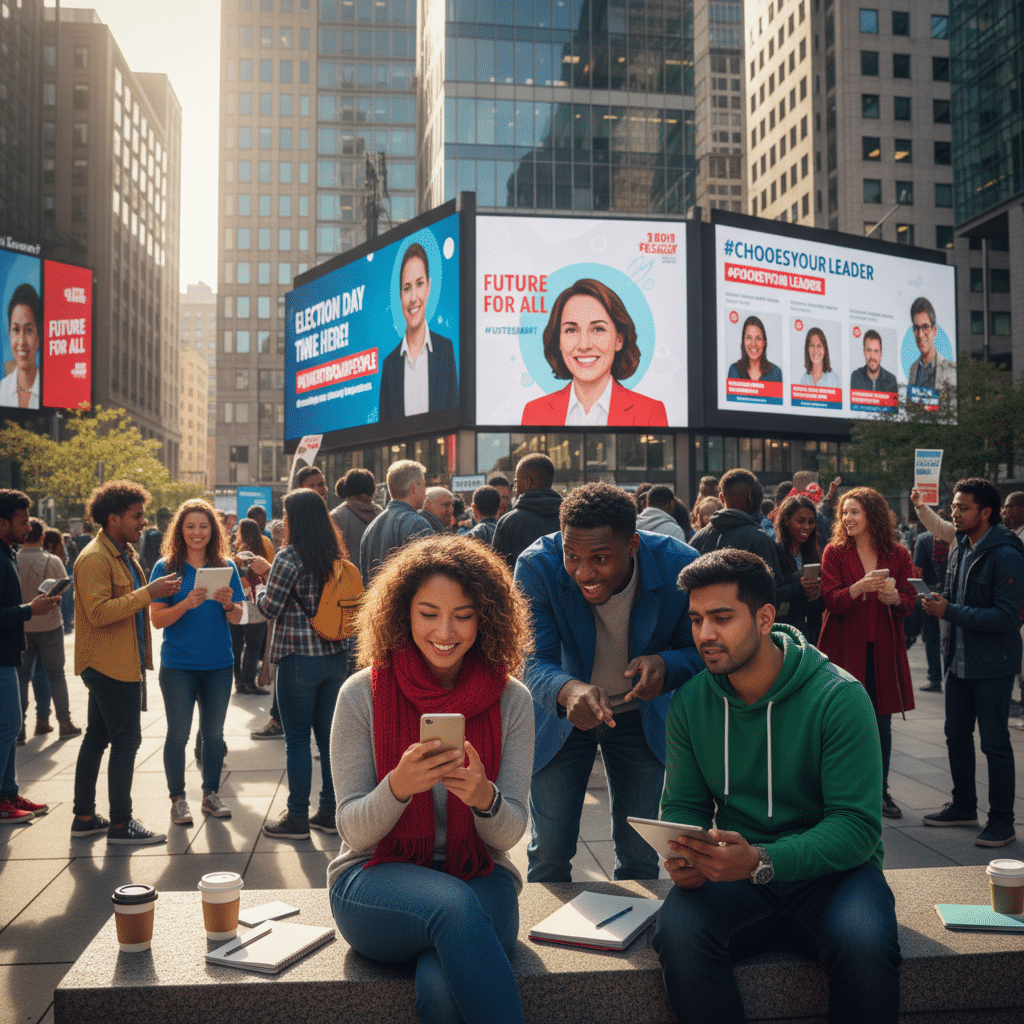
Democracy in the Digital Age: The Impact of Social Media on Public Opinion and Elections examines how social media platforms have transformed political communication, public opinion formation, and electoral processes in contemporary democracies. With the rise of platforms such as Facebook, Twitter (now X), Instagram, and TikTok, political actors can rapidly disseminate messages to broad and diverse audiences, reshaping traditional dynamics of voter engagement and participation. This digital shift has enabled new forms of political mobilization, especially among younger demographics, while also introducing challenges related to misinformation, polarization, and the integrity of democratic institutions.
Social media’s algorithm-driven environments foster personalized and emotionally charged content that often amplifies partisan divisions and creates echo chambers, intensifying affective polarization—the growing social and emotional divide between political groups. While these platforms facilitate greater political expression and civic engagement, they also contribute to the rapid spread of false information and disinformation campaigns, which have undermined public trust in electoral processes and democratic legitimacy, notably during recent U.S. presidential elections. The persistence of misleading narratives and targeted misinformation poses serious risks to fair competition and voter confidence worldwide.
The influence of social media on elections is complex and double-edged. Campaigns utilize these platforms for highly targeted political advertising and personalized mobilization efforts, which can enhance voter knowledge and turnout. However, platform algorithms often prioritize engagement over accuracy, inadvertently amplifying sensational or misleading content. Content moderation policies have evolved in response, yet controversies remain regarding their effectiveness, transparency, and potential impact on free political expression, particularly amid shifting corporate ownership and political pressures.
Furthermore, issues of data privacy, cybersecurity, and algorithmic transparency intersect with these political dynamics, raising concerns about user trust and the ethical use of personal information by major social media companies. The emergence of artificial intelligence technologies intensifies both the potential benefits and threats to democratic discourse, as AI tools can be harnessed for targeted campaigning or exploited for sophisticated misinformation and cyberattacks. Understanding and addressing these multifaceted challenges is critical for safeguarding democracy in an increasingly digital public sphere.
Historical Context
Traditional media has long played a crucial role in shaping public opinion and political discourse by “setting the agenda,” determining which stories and topics receive the most attention. This agenda-setting function influences voters’ perceptions, priorities, and decisions, whether intentionally or unintentionally. Historically, political actors, including populist radical-right parties in Europe, utilized traditional platforms such as television, radio, and print press to disseminate their messages since World War II.
With the advent of new and social media, the landscape of political communication transformed dramatically. Platforms like Facebook, Twitter, YouTube, and Weibo expanded the reach of political content to larger and more diverse audiences, enabling rapid dissemination of information and messages within a short time span. Social media has become central to political movements, including populism, by providing novel and dynamic methods for political strategies and engagement. The interconnected nature of social networks facilitates the diffusion of desired behaviors and political attitudes among groups, creating new forms of social webs that influence public opinion.
However, this digital transformation has also raised concerns about the integrity of democratic processes. The 2020 U.S. presidential election exemplified unprecedented challenges to electoral institutions, with concerted efforts to undermine public trust and question election legitimacy. Democratic elections depend fundamentally on competitive processes, confidence in electoral institutions, and informed citizen participation. International democratic standards emphasize the right of citizens to receive accurate information and to compete on a level playing field in political contests.
Alongside these political implications, the rise of social media has brought issues of data privacy and user trust to the forefront. Platforms that prioritize transparency, user consent, and privacy are more likely to maintain public engagement, especially among younger users. Conversely, aggressive data collection practices, manipulation, and opaque data use policies—exemplified by companies like Meta and ByteDance—have sparked widespread concerns about privacy and the ethical use of personal data, particularly in the context of AI development and algorithmic training. These challenges underscore the complex interplay between technological innovation, political communication, and democratic governance in the digital age.
Role of Social Media in Democracy
Social media has become a central platform for political communication and participation, fundamentally transforming democratic processes and electoral dynamics. The advent of new and social media platforms such as Facebook, Twitter, YouTube, and TikTok has expanded the reach and speed of political content distribution, enabling messages to spread rapidly to larger and more diverse audiences.
The interactive and algorithm-driven nature of social media fosters a novel political communication environment. Politicians and campaigns often tailor their messages to fit the specific sociotechnical affordances of different platforms and the preferences of their immediate communication networks, rather than addressing a mass audience uniformly. This targeted communication allows for more personalized engagement but also raises questions about the fragmentation of public discourse.
Social media platforms have played significant roles in recent elections, with users actively producing and sharing politically charged content. For example, during the 2020 U.S. presidential election, TikTok users created viral videos advocating for candidates and raising awareness of critical issues such as healthcare, climate change, and racial justice. The platform’s predominantly younger demographic found political action more accessible through the combination of visual storytelling and political messaging. Similarly, Facebook and Instagram were used extensively for political advertising, with some campaigns, such as Donald Trump’s in 2016, reportedly spending more on Facebook ads than their opponents, capitalizing on the viral potential of social networks.
Social media also amplifies political events through a bandwagon effect, whereby successes or failures of candidates are rapidly magnified by users, intensifying their impact on public opinion. However, this amplification power comes with challenges, including the rapid spread of misinformation. The difficulty in regulating online political content and the presence of algorithmic curation have raised concerns about transparency, accountability, and the overall health of democratic discourse.
Experimental studies of platform algorithms reveal complex effects on political engagement and exposure. For instance, altering Facebook and Instagram feeds from algorithmic to chronological order reduced users’ time on these platforms but increased their exposure to political and sometimes untrustworthy content, while decreasing uncivil or slur-containing content on Facebook. On TikTok, political content discovery relies heavily on algorithmic recommendations that prioritize short, emotionally engaging clips, often favoring partisan-aligned videos over traditional political messaging.
Despite the concerns, social media also provides new avenues for civic engagement and political participation, offering diverse groups the opportunity to express opinions, organize, and mobilize. The challenge for democracies lies in balancing the benefits of rapid, broad political communication with the risks of misinformation, polarization, and manipulation. As the role of social media in democracy continues to evolve, understanding its influence on public opinion and electoral outcomes remains a critical area of inquiry.
Impact on Public Opinion
Traditional media has long held significant influence over public opinion by the ability to “set the agenda,” determining which stories and topics receive the most coverage and thereby shaping voter perceptions, priorities, and choices. However, the rise of social media platforms has introduced new dynamics in the formation and polarization of public opinion, particularly during election periods.
Social media algorithms prioritize emotionally charged and sensational content to maximize user engagement, often amplifying polarizing political messages. This prioritization contributes to the creation of echo chambers, where users are predominantly exposed to opinions that align with their existing views, reinforcing partisan attitudes and increasing affective polarization—the phenomenon where party affiliation becomes a key factor in interpersonal relations. Exposure to like-minded or pro-attitudinal media on social platforms further escalates this polarization, with real-world consequences such as divided households and increased political tensions.
Despite concerns about algorithms, recent research suggests that social media’s impact on political polarization may not be solely algorithm-driven. For example, studies involving changes to Facebook’s and Instagram’s feed algorithms showed that removing algorithmic curation increased exposure to political and untrustworthy content, indicating that factors beyond algorithms contribute to the spread of such material. This nuanced understanding highlights the complexity of social media’s role in shaping public opinion.
The proliferation of misinformation and disinformation on social media also significantly affects public perceptions of electoral integrity and democratic processes. False political news peaked during major election cycles such as the 2012 and 2016 U.S. presidential elections, with documented efforts by foreign actors to exploit platforms like Facebook, Twitter, and Instagram to spread fabricated content and conspiracy theories. This spread of misinformation undermines the free formation of public opinion and contributes to the erosion of public confidence in both the media and electoral systems.
Interestingly, the influence of social media on political polarization and legitimacy perceptions can vary. For instance, research during a presidential election indicated a slight reduction in issue polarization with social media exposure, possibly due to the saturation of political information from multiple sources beyond social platforms. Nonetheless, social media remains a critical battleground for competing narratives about electoral legitimacy, including messages related to voter fraud, suppression, and foreign interference.
Influence on Elections
Democratic elections depend fundamentally on a competitive process, trust in electoral institutions, and informed citizen participation. International standards emphasize the right of voters to access accurate information and the necessity of fair conditions for political contests. The advent of social media and online platforms has transformed the electoral landscape by enabling information to be disseminated at unprecedented speeds, distances, and volumes, thereby reshaping how campaigns engage with voters and how citizens consume political content.
Social media platforms such as TikTok, X (formerly Twitter), Facebook, and Instagram have become central to modern campaign strategies, offering cost-effective and highly flexible alternatives to traditional advertising methods. Unlike traditional advertisements that remain static once published, social media content can be rapidly updated, adjusted based on audience feedback, and tested in real time, which strengthens engagement and allows campaigns to build closer connections with voters. This interactivity appeals especially to younger voters, who are more likely to participate in political action through platforms combining visual narrative and political messaging.
Research shows that political advertisements on these platforms can increase voter knowledge about candidates and influence support, though the persuasiveness depends on multiple factors. Additionally, personalized political mobilization messages disseminated by close friends within social networks have a significantly stronger effect on voter turnout than impersonal informational messages, with studies indicating that social messages can quadruple validated voter mobilization compared to control groups. The multiplier effects created by a few influential users or minority influencers, through retweets or shares, can amplify support for candidates or policies to a much larger scale.
However, the influence of social media is double-edged. Algorithms that prioritize user engagement often amplify sensational, polarizing, or misleading content over accuracy, raising concerns about misinformation and disinformation that can distort the democratic process. Experimental studies during elections reveal that algorithmic feeds shape the nature and quantity of political content users see, sometimes increasing exposure to untrustworthy or politically extreme material while decreasing exposure to moderate voices. This dynamic has contributed to heightened affective polarization among voters, particularly noticeable during the 2020 U.S. presidential election.
Misinformation—false rumors and misconceptions—and disinformation—intentionally misleading messages—spread on social media pose significant challenges to election transparency and accountability. Election boards and trusted institutions work actively to counteract these effects through multiple communication channels, including social media itself. Meanwhile, political actors and parties must navigate a landscape where social media influencers can both moderate policy positions to attract wider electorates and exacerbate societal polarization.
Case Studies
Social media’s influence on elections has been extensively studied through various national and international case studies, highlighting its growing role in shaping public opinion and voter behavior.
United States Presidential Elections
The 2016 and 2020 U.S. presidential elections serve as pivotal examples of social media’s impact. Both Donald Trump and Hillary Clinton invested heavily in platforms like Facebook, Twitter, and Instagram to reach voters, promote their campaigns, and mobilize supporters. Notably, Twitter’s political content exhibited a left-leaning bias during this period, which likely contributed to its pro-Democratic effect observed in these elections, especially impacting Trump’s vote share negatively in 2016 and 2020. Instagram emerged as a critical platform among younger voters, with significant political content that contributed to heightened affective polarization at an all-time high during the 2020 election cycle.
The COVID-19 pandemic intensified reliance on virtual communication, further elevating social media’s role as a communication channel during the 2020 election, with approximately 233 million U.S. users engaging online. Campaigns utilized these platforms not only to disseminate information but also to counteract misinformation and encourage voter turnout through targeted messaging.
Disinformation and Misinformation Challenges
The 2024 U.S. presidential election illustrated the persistent challenges posed by false and misleading information on social media. Organized disinformation campaigns shaped public opinion by spreading conspiracy theories and fabricated stories about candidates and political issues. Examples included unfounded claims related to immigration, disaster relief funding, and personal attacks on candidates like Kamala Harris and Tim Walz. These disinformation efforts underscored ongoing concerns about the integrity of democratic processes in the digital age and the responsibilities of social media companies to moderate content.
International Perspectives
Beyond the United States, social media’s role in elections has been observed in diverse contexts. The 2017 Italian general election, 2017 Ecuadorian presidential election, 2018 Brazilian presidential election, and 2018 Malaysian general election each featured significant social media campaign activities that influenced voter engagement and outcomes. While most studies focus on individual platforms, recent research highlights the importance of cross-platform analysis to better understand how different social media channels interact to predict election results and shape political discourse.
Emerging Platforms and Youth Engagement
Platforms like TikTok have demonstrated a unique capacity to engage younger voters by blending visual storytelling with political messaging. During the 2020 U.S. presidential election, TikTok users collectively created and shared content endorsing candidates and raising awareness on key issues such as healthcare, climate change, and racial justice. The platform’s appeal lies in making political participation more accessible and relatable for younger demographics, signaling a shift in how electoral campaigns approach voter mobilization in the digital era.
Content Moderation and Platform Policies
Social media platforms have faced increasing scrutiny over their role in shaping public opinion and influencing elections, particularly regarding the spread of misinformation and disinformation. In response to criticisms—especially following the 2016 United States election—these platforms have implemented new policies aimed at protecting electoral integrity. However, the efficacy and transparency of these measures remain contested.
Platforms have adopted varied approaches to content moderation during election periods. TikTok, for example, stands out among major platforms for having policies that address most forms of election misinformation by relying on a network of fact-checkers. When the veracity of information is uncertain, TikTok temporarily removes such content from its “For You” feed until a determination is made, potentially making it a more reliable source for election-related information, although its role in political discourse remains less central for many Americans.
Conversely, other platforms such as Twitter have historically been more reluctant to remove content outright, instead applying labels to tweets flagged for misinformation. Twitter utilized three types of labels corresponding to varying degrees of harm associated with election misinformation. However, since Elon Musk’s acquisition of Twitter in late 2022, the platform’s misinformation policies have become inconsistent, exacerbated by significant layoffs within the Trust and Safety team responsible for policy enforcement.
Despite these efforts, concerns remain about the potential negative consequences of content moderation practices. For instance, attaching warnings or labels to disputed posts may lead to the “implied truth effect,” wherein users assume that unlabeled information is accurate, inadvertently undermining the intent to correct misinformation. Moreover, efforts to rein in election misinformation can risk suppressing legitimate political expression and dissent if not implemented proportionally and transparently. Platforms are urged to ensure restrictions on content are necessary, proportionate, and accompanied by meaningful remedies for users.
The algorithms that govern content filtering and amplification on social media are also under examination for their role in promoting or censoring election-related information. Researchers continue to study how these algorithms influence political discourse and potentially affect election outcomes by amplifying disinformation or silencing certain viewpoints. This is especially critical as the rapid spread of misinformation, including sophisticated video manipulations and deep
Data Privacy, Transparency, and Public Trust
The increasing integration of social media platforms into daily life has heightened concerns around data privacy, transparency, and their impact on public trust. Users often experience stress, fear, and a loss of control over their personal information when privacy violations occur, which can significantly affect their mental and physical well-being. Additionally, businesses and platforms suffer reputational damage and financial consequences due to legal ramifications and eroded user trust.
Central to these concerns is the extensive collection and analysis of user activity data, which is frequently used to train artificial intelligence models for content generation and decision-making. This practice raises questions about user consent and the transparency of data handling policies, particularly among major technology companies such as Meta and ByteDance, whose aggressive data mining and scraping practices have drawn scrutiny. Platforms that emphasize user privacy, transparency, and consent tend to gain greater public trust, especially among younger demographics, while those that neglect these principles risk disengagement and loss of user base. Consequently, data privacy has become crucial for maintaining user trust and ensuring the sustainability of social media applications in the AI era.
Moreover, unauthorized access to social media accounts remains a tangible threat, with studies showing that 13 percent of Americans have experienced account takeovers, further underscoring the vulnerabilities users face online. The lack of clear, consistent regulations surrounding data collection and use amplifies these risks and contributes to a broader atmosphere of distrust toward digital platforms.
Transparency in content moderation and electoral-related misinformation policies is also pivotal. Although social media companies have implemented new measures to protect election integrity, efforts to curb misinformation must balance preventing harm with preserving political expression and dissent. To maintain public trust, restrictions on content should be necessary, proportionate, transparent, and provide meaningful avenues for user recourse. Overall, the interplay between data privacy, transparency, and public trust shapes not only user experiences but also the broader democratic processes in the digital age.
Cybersecurity Threats Related to Social Media and Elections
Social media platforms have become significant vectors for cybersecurity threats that target both individuals and electoral processes. These threats exploit the personal information users share online, making them vulnerable to hackers and scammers who seek to access sensitive data. Common cyber threats associated with social media include malicious software distribution, phishing scams, identity theft, and account hijacking. Attackers often use deceptive links and messages from untrusted sources to deliver malware, posing risks to individuals, businesses, and election infrastructure alike.
Elections and political events present particularly attractive targets for cyber threat actors. Phishing campaigns, ransomware, and distributed denial-of-service (DDoS) attacks commonly focus on election infrastructure assets such as electronic poll books and voter registration databases. Compromising these systems can lead to confusion, delays, and manipulation of voting outcomes. Additionally, attackers use disruptive tactics such as web defacements and leaking stolen data to influence public perceptions and voter behavior.
The rise of artificial intelligence (AI) introduces new dimensions of risk to election cybersecurity. Nation-state actors can harness AI to analyze social media and public sentiment, crafting highly effective disinformation campaigns aimed at manipulating voter behavior. AI tools can also simulate fake voting patterns to sow confusion and undermine confidence in electoral integrity. Moreover, AI-driven automation enhances the reconnaissance phase of cyberattacks by rapidly identifying and exploiting vulnerabilities, challenging traditional cybersecurity defenses.
These evolving cyber threats highlight the urgency for coordinated efforts among election authorities, technology providers, and policymakers to implement robust cybersecurity measures. Proactive strategies, including anticipating vulnerabilities and promoting transparency, are essential to safeguarding elections against the rapidly advancing tactics employed by malicious actors. Ensuring the integrity of AI systems and fostering trust in both traditional and social media are also critical, as media influence significantly shapes public perceptions of electoral quality and can either mitigate or exacerbate misperceptions of election integrity.
Strategies and Measures to Combat Digital Election Threats
Protecting election infrastructure from digital threats requires a multifaceted approach involving technological tools, training, collaboration, and proactive cybersecurity practices. Key strategies include defense against distributed denial-of-service (DDoS) attacks, phishing, ransomware, misinformation campaigns, and manipulation of voter data.
One important technological measure is the deployment of services such as Project Shield, which offers free protection to news outlets, human rights organizations, and election-monitoring sites against DDoS attacks. Additionally, tools like Lumu Free provide continuous network monitoring by analyzing multiple sources of metadata (DNS, proxy, firewall), enabling early detection of contact with malicious infrastructure and facilitating timely threat mitigation. These tools also often provide free digital certificates to enable HTTPS encryption, bolstering website security and trustworthiness during elections.
Given that election infrastructure assets such as electronic poll books and voter registration databases are frequent targets for phishing and ransomware, protecting these systems is critical. Cyber threat actors commonly exploit social engineering tactics, including phishing via email, text messaging, and social media, to trick individuals into divulging personal information or downloading malicious software. These attacks are often timed to coincide with elections and political events to maximize impact.
To counter these threats effectively, comprehensive training programs for election officials, IT personnel, and other stakeholders are essential. Training focuses on cybersecurity best practices, including recognizing and responding to phishing attempts, understanding social engineering tactics, and detecting deepfake and other AI-generated content. Enhancing media and information literacy among the general public further strengthens resilience against misinformation and manipulative content.
Collaboration plays a pivotal role in election cybersecurity. The Cybersecurity and Infrastructure Security Agency (CISA) works closely with federal, state, and local governments, election officials, private sector partners, and other stakeholders to secure election systems. CISA provides resources, guidance, and free services aimed at managing risks to election infrastructure, emphasizing transparency and adaptability in responding to emerging threats. Similarly, the Federal Bureau of Investigation (FBI) partners with CISA to offer support for assessing and mitigating physical and digital risks to election personnel and assets.
Proactive cybersecurity measures are fundamental to safeguarding elections against rapidly evolving cyber threats. This includes anticipating vulnerabilities, implementing robust protective technologies, and maintaining vigilance against tactics aimed at disrupting elections or influencing public perceptions, such as web defacements, data leaks, and social media campaigns. Maintaining the integrity of AI systems and promoting transparency in electoral processes are also critical components of a comprehensive defense strategy.
Evolution and Adaptation of Misinformation Campaigns
Misinformation campaigns surrounding elections have demonstrated a notable persistence and evolution over time, often recycling core false narratives to sustain their influence. Research indicates that prominent election deniers repeatedly rely on a consistent set of misleading themes, particularly regarding voting machines, mail-in voting, and allegations of voter fraud. These narratives are described as “sticky,” as they not only recur but also adapt and evolve across election cycles, making them resilient to correction efforts and allowing for targeted prebunking strategies.
The proliferation of digital technology, especially social media platforms, has intensified the reach and complexity of misinformation. With over 233 million social media users in the United States, these platforms have become critical battlegrounds for shaping public opinion ahead of elections. The increased reliance on virtual communication during the COVID-19 pandemic further amplified the importance and influence of these channels. Alongside legitimate political engagement, social media has enabled a surge in sophisticated misinformation techniques, including deepfakes and manipulated video content. These artificial intelligence (AI)-driven tools have been used to fabricate false footage, making candidates appear to commit missteps or behave incompetently, thereby undermining public trust and skewing perceptions.
Political campaigns have also harnessed AI technologies to craft and disseminate targeted messages, ranging from automated text generation to the deployment of synthetic AI callers. These innovations serve multiple purposes, such as mobilizing voters, conveying opponent policy portrayals, and launching personal attacks against candidates. However, the increased use of AI raises concerns about algorithmic manipulation, where social media algorithms can be exploited to amplify specific political content or suppress opposing views. This dynamic poses significant risks to electoral integrity and calls for coordinated efforts among election authorities, technology providers, and policymakers to enforce cybersecurity measures, ensure AI system transparency, and uphold democratic processes.
Moreover, misinformation campaigns are not limited to false rumors but often include deliberate disinformation designed to mislead voters. These campaigns have been linked to real-world consequences, including increased hostility toward election officials—64 percent of whom reported that misinformation made their jobs more dangerous in 2022—and the justification of restrictive voter suppression laws by some lawmakers. The persistence of such campaigns has also led to widespread and damaging false narratives about candidates, such as fabricated stories about immigrant behavior or unfounded allegations against public figures, which contribute to polarization and mistrust.
Efforts to counter misinformation face challenges, including the unintended effects of content moderation strategies. For example, attaching warnings to disputed social media posts can sometimes reinforce false beliefs among users who interpret unlabeled content as truthful, a phenomenon known as the “implied truth effect”. Additionally, social media platforms have struggled to effectively moderate misinformation in non-English languages, disproportionately affecting language minority communities and undermining equitable access to accurate election information. Transparency regarding the effectiveness of these interventions remains limited, highlighting the need for platforms to publish comprehensive data on content moderation outcomes and the impact of their policies on democratic engagement.
Changes in Voter Engagement Due to Social Media
Social media has fundamentally transformed voter engagement by introducing new channels for political campaigns and reshaping the traditional patterns of electoral participation. Unlike the predictable cycles tied to debate nights or news broadcasts, voter interaction with political content on social platforms is dynamic and interactive. Voters no longer passively consume information; instead, they actively react to, reinterpret, remix, and redistribute political messages. This shift has been particularly significant among younger voters, who tend to prefer engaging with campaigns through social media rather than traditional television interviews.
The influence of social media on voter behavior is multifaceted. Platforms such as Facebook and Instagram, especially popular among younger demographics, play critical roles in shaping political discourse. During the 2020 U.S. presidential election, these platforms were central to the dissemination of political content and campaign efforts aimed at swaying voter preferences and encouraging turnout. However, the pervasive presence of political content on social media also contributed to heightened affective polarization among voters, reaching unprecedented levels in 2020.
Social media affects offline political participation through several mechanisms. It can increase or decrease overall election interest, provide information about polling locations and candidates, and potentially displace time that might have been used for other forms of civic engagement. Both the reach and tone of political messages are influenced by the platforms’ algorithms, which in turn affect voter exposure to various types of content, including untrustworthy or uncivil material. Studies examining algorithmic changes found that moving users to reverse-chronological feeds increased exposure to political and untrustworthy content, while decreasing exposure to uncivil language and increasing contact with ideologically diverse sources on platforms like Facebook.
Moreover, social media’s role in political engagement extends beyond message consumption to altering the nature of democratic discourse itself. While traditional participatory democracy emphasizes rational debate and informed decision-making, social media encourages broad participation often without substantive engagement. This has led to a fragmentation of ideas and the rise of populist rhetoric, reflecting a more pathological form of democratic interaction marked by polarized and emotionally charged content rather than coherent deliberation.
Despite these changes, politicians have largely replicated traditional campaign messages on social media rather than fully leveraging the platforms’ interactive potential. Engagement with users remains limited, suggesting that while social media transforms voter interaction, political communication strategies have been slower to adapt to this new environment.
Effects of Misinformation and Polarization on Democratic Processes
Misinformation and polarization significantly impact democratic processes by undermining trust in electoral integrity, distorting public perceptions, and fueling political division. Social media platforms play a central role in this dynamic, both by disseminating false information and by intensifying affective polarization among citizens.
Exposure to election-related misinformation—including falsehoods about voting procedures, election workers, and electoral fraud—has tangible consequences on voter participation and trust in democratic institutions. Since the 2020 U.S. presidential election, the spread of the “Big Lie” that the election was stolen has been amplified by politicians and candidates, rapidly circulating on social media platforms that have often failed to adequately moderate such content. This misinformation threatens the safety of election officials, with 64 percent reporting increased danger linked to the spread of false information. Furthermore, these false narratives have been weaponized by some lawmakers to justify restrictive voter suppression measures, thereby affecting electoral competitiveness and fairness.
The consumption of social media information correlates with greater exposure to incomplete, deceptive, or inaccurate election-related content, which fosters entrenched misperceptions about electoral integrity. Trust in social media as a news source can thus heighten the risk of “deep-seated misinformed beliefs,” potentially eroding democratic legitimacy. This is exacerbated in environments with limited press freedom or where traditional media fail to provide balanced reporting, highlighting the interplay between media trust, political context, and misinformation exposure.
Polarization is further intensified by social media’s role in shaping political attitudes. Exposure to ideologically congruent (“like-minded”) content increases affective polarization, wherein party affiliation becomes a critical determinant of social relationships and identity. This heightened polarization can manifest in divided households and even political violence, contributing to democratic backsliding. Social media’s encouragement of public opinion expression without necessarily fostering informed democratic engagement undermines participatory democracy by privileging vocal but potentially uninformed voices over rational deliberation.
The widespread dissemination of disinformation is not limited to elections but spans multiple public domains, such as public health and race relations, reflecting organized efforts to shape public opinion. Examples from recent campaigns include fabricated stories designed to malign candidates and sow distrust. Addressing these challenges requires meaningful content moderation by social media platforms, increased transparency, and accessible voter education to protect democratic integrity. However, recent policy shifts, including reductions in content moderation personnel and relaxed political advertising rules, risk exacerbating misinformation circulation.
Ultimately, democratic elections depend on competitive processes, faith in electoral institutions, and informed citizen participation, all of which require access to accurate and reliable information. The undermining of these foundations by misinformation and polarization threatens the core principles of democracy in the digital age.
Challenges and Criticisms
Social media’s growing role in shaping public opinion and electoral outcomes has elicited significant challenges and criticisms, particularly regarding misinformation, political polarization, and the implications for democratic processes. One of the foremost concerns is the rapid dissemination of false and misleading information, which threatens the integrity of elections even years before voting takes place. The unprecedented speed and scale of news sharing on digital platforms complicate efforts to ensure transparency and accountability in online political campaigning.
A central challenge lies in the exacerbation of political polarization, which social media may intensify by fostering affective divisions among citizens. Scholars such as Iyengar and Krupenkin highlight how party affiliation has become a primary determinant of interpersonal relations, a dynamic worsened by social media’s echo chambers and algorithmic influences. This polarization can fuel social unrest and undermine democratic institutions, as seen in various global contexts where political tensions lead to protests and conflicts that hinder peaceful governance.
Efforts by social media platforms to curb electoral misinformation have resulted in new policies aimed at protecting election integrity. However, these measures face criticism for potentially restricting legitimate political expression and dissent if not implemented transparently and proportionately. Furthermore, constitutional and regulatory frameworks, especially in the United States, impose limitations on content moderation, complicating the balance between fighting misinformation and upholding free speech.
The manipulation of algorithms and the emerging use of artificial intelligence (AI) present additional challenges. AI-driven tools can amplify certain political messages or suppress others, automate cyberattack reconnaissance, and simulate fake voting patterns, thereby confusing and manipulating public opinion. Such technological capabilities enable bad actors, including nation-states, to scale disinformation campaigns across borders rapidly, exploiting the interconnectedness of digital media environments.
Despite concerns about algorithmic influence, some studies suggest that algorithms may not be the sole or primary driver of exposure to problematic content. For example, recent research indicates that chronological feeds might increase exposure to untrustworthy content but that social media algorithms themselves may have limited effects on political polarization. Nonetheless, these findings underscore the complexity of the media environment as the 2024 U.S. presidential election approaches, with experts emphasizing ongoing challenges such as news fatigue, misinformation, and polling impacts on voter behavior.
Future Trends and Prospects
The evolving relationship between social media and democratic processes presents both significant challenges and promising opportunities for the future. One critical area for future research involves examining individual characteristics and cross-cultural differences in how social media influences public opinion and election dynamics. Such studies could inform more tailored and effective interventions aimed at mitigating polarization and enhancing democratic discourse.
Technological advancements, particularly in artificial intelligence (AI), hold considerable potential to reshape social media’s role in elections. AI-driven algorithms, which currently can be manipulated to amplify partisan messages or suppress dissenting views, might be reconfigured to promote positive societal outcomes, such as reducing affective polarization and fostering constructive dialogue. However, these possibilities depend on concerted efforts by election authorities, technology providers, and policymakers to implement robust cybersecurity measures, maintain the integrity of AI systems, and ensure transparency in algorithmic decision-making processes.
Transparency remains a cornerstone for safeguarding electoral integrity in the digital age. Social media platforms need to provide researchers and the public with comprehensive data access and detailed transparency reports to assess the effectiveness of policies aimed at combating misinformation. Understanding the impact of content labeling, error rates in content moderation, and strategies to reduce algorithmic amplification of falsehoods is essential for improving platform accountability and user trust.
The interplay between traditional media, social media, and public trust will continue to shape perceptions of electoral legitimacy. Studies suggest that misperceptions regarding election integrity often stem from varying levels of trust in media sources and the political context, including press freedom conditions. Therefore, election officials, who remain highly trusted across party lines, are poised to play a proactive role in countering misinformation through voter education, rumor control initiatives, and transparent communication.
Looking ahead to upcoming electoral cycles, frameworks developed to understand the interactions between disinformation, social media, and word-of-mouth communication during the 2016 and 2020 elections are expected to remain relevant. This continuity underscores the need for adaptive strategies that respond to the evolving digital landscape, especially as the potential for misinformation to worsen persists amid ongoing debates about free speech and platform governance.
Ultimately, addressing these challenges requires balancing efforts to curb harmful content with the protection of political expression and dissent. Policymakers and social media companies must ensure that restrictions on content are necessary, proportionate, and transparent, providing users with meaningful avenues for redress. By fostering informed public discourse and enhancing the resilience of democratic institutions, future interventions can help promote healthier democratic engagement in an increasingly digital society.
The content is provided by Avery Redwood, News Scale