Summary
“Unleashing the Excitement: Australia’s Federal Election Campaigns Heat Up” examines the dynamic and evolving nature of federal election campaigns in Australia, highlighting the increasing complexity, diversity, and intensity of political contests. Over recent decades, Australia’s federal elections have transformed from traditional two-party battles dominated by the Australian Labor Party (ALP) and the Liberal-National Coalition into a more pluralistic and fragmented landscape featuring a growing number of independents and minor parties. This shift reflects changing voter attitudes and priorities, with the 2022 and 2023 election cycles notably marked by record crossbench representation and the rise of influential independent candidates, including the so-called “teal independents” who emphasize climate action and social equity.
Central to contemporary campaigns are pressing socioeconomic issues such as the ongoing cost-of-living crisis, housing affordability, and economic uncertainty driven by global factors like international trade tensions and tariffs. Climate change and environmental policies also play a pivotal role, with parties presenting varied approaches to emission reductions, energy transition, and disaster resilience. Indigenous affairs, particularly the debate around the Indigenous Voice to Parliament, have remained prominent, drawing both support and controversy across the political spectrum.
Campaign strategies have become increasingly sophisticated, leveraging digital platforms for targeted voter engagement and investing heavily in online advertising. However, these advances have sparked concerns over privacy and transparency, especially regarding the use of secretive voter databases by major parties. Media coverage and public debates have expanded to include a broader array of voices, reflecting the diversified political landscape, while government-funded advertising campaigns have also influenced the electoral narrative.
The article further explores how these multifaceted campaigns impact policy development and governance, with recent election outcomes shaping reforms in housing, climate policy, and economic management. Looking ahead, the coordination of election timing to avoid overlapping state and federal polls, alongside shifting voter demographics and issue salience, suggests that Australia’s federal elections will continue to be vibrant contests that both reflect and shape the nation’s political and social future.
Historical Context
Australia’s federal election campaigns have evolved significantly over time, reflecting changes in political dynamics and societal concerns. Traditionally dominated by the two major parties, recent elections have demonstrated a shift toward greater diversity in representation, with a record number of independents and minor parties securing seats in the crossbench and the Senate. This diversification indicates a transformation in voter behavior and party competition.
Economic issues have consistently played a central role in election campaigns. For example, ongoing cost-of-living pressures and global economic uncertainties, such as those influenced by international trade policies, have shaped campaign narratives. Housing affordability has emerged as a particularly prominent concern, with experts emphasizing the need for comprehensive policy approaches including investment in social housing, rental protections, and tax reform—areas often overlooked in favor of simpler supply-side slogans.
Campaign timing has also been influenced by considerations of state and federal election scheduling. To avoid overlapping campaigns and voter confusion, care is taken to separate federal elections from significant state elections, such as the Western Australian state election slated for March 2025. This coordination helps maintain clear campaign periods and prevents logistical challenges that arise from simultaneous elections.
The role of campaign strategy and media targeting has grown in importance. Political marketing experts highlight the significance of early voter engagement and tailored outreach via digital platforms, with different media channels catering to distinct demographics—Meta platforms appealing to younger voters, and Google targeting older age groups. These developments illustrate the increasing complexity and sophistication of federal election campaigns in Australia.
Key Political Players
Australia’s federal elections feature a diverse range of political parties and independent candidates, with several key players dominating the landscape. The two major parties are the Australian Labor Party (ALP) and the Liberal Party, often in coalition with the National Party. Beyond these, smaller parties and independents have increasingly played significant roles in shaping electoral outcomes and parliamentary dynamics.
The Australian Labor Party, founded in 1893, is a centre-left party formally linked to the Australian labour movement. It consists of eight autonomous branches representing each state and territory, each responsible for campaigning within their jurisdictions. The ALP has been a major federal party since 1901 and one of the two dominant parties since the 1910 federal election. Labor’s platform emphasizes immediate relief for economic pressures alongside long-term investments in housing and clean energy, positioning itself as a party focused on both social welfare and environmental sustainability.
The Liberal Party, established in 1944 as the successor to the United Australia Party, is historically Australia’s most electorally successful party. It has traditionally formed a coalition with the National Party, with the partnership enduring through most federal governments since its inception. Although currently in opposition at the federal level, the Liberal Party holds government in several sub-national jurisdictions including the Northern Territory, Queensland, and Tasmania. In Queensland and the Northern Territory/South Australia, the Liberal and National parties have merged into joint entities, such as the Liberal National Party of Queensland, which functions as a branch of the Liberal Party while maintaining National Party affiliations.
The National Party primarily represents rural and regional interests and has long been the junior partner in the Coalition. Together, the Liberal and National parties focus their policy platforms on tax cuts, energy security, and infrastructure development as central pillars to their economic vision.
In addition to the major parties, the Greens hold a notable presence in parliament as the only major party advocating for science-aligned climate policies, including the cessation of new coal and gas projects. Their efforts in the 47th Parliament have been instrumental in advancing climate action legislation and pushing the government toward stronger environmental commitments. The Greens continue to promote bold reforms targeting wealth redistribution and enhanced climate resilience.
Other influential political players include minor parties such as One Nation and United Australia, as well as an increasing number of independent candidates, especially in key Liberal-held seats. The rising number of independents and minor party representatives marks a significant shift in Australia’s political landscape, reflecting changing voter attitudes and a more fragmented parliamentary composition.
Together, these parties and individuals constitute the vibrant and competitive field of contenders in Australia’s federal elections, each bringing distinct policy priorities and visions for the country’s future.
Campaign Themes and Issues
The 2025 Australian federal election campaigns are largely centered around the ongoing cost-of-living crisis and growing global economic uncertainty, particularly relating to tariffs imposed by previous international administrations. Housing affordability has emerged as a critical issue for voters, with widespread calls for genuine solutions that go beyond simple supply slogans to address structural barriers. Proposals include greater investment in social and affordable housing, nationwide rental protections, and a fairer tax system to alleviate housing stress.
Economic management remains a major concern, with inflation, interest rates, and household debt at the forefront of political debate. The Labor Party emphasizes its economic strategy that integrates climate policy, focusing on transitioning to 100% renewable energy and phasing out fossil fuel industries, alongside social measures like a wealth tax on billionaires and large corporations to fund social programs. The rising cost of electricity and gas, partly attributed to renewable energy policies, has also become a contentious point, with the opposition criticizing the resultant price increases.
Climate change and environmental policy continue to shape campaign discourse, with parties presenting varying commitments to reducing carbon emissions and managing climate risks. Labor has adopted non-binding targets for renewable electricity and introduced initiatives to support household energy resilience, while other independents and parties advocate for stronger adaptation strategies and polluter pays principles. The debate includes the need to balance insurance affordability with discouraging settlement in high-risk areas prone to extreme weather events.
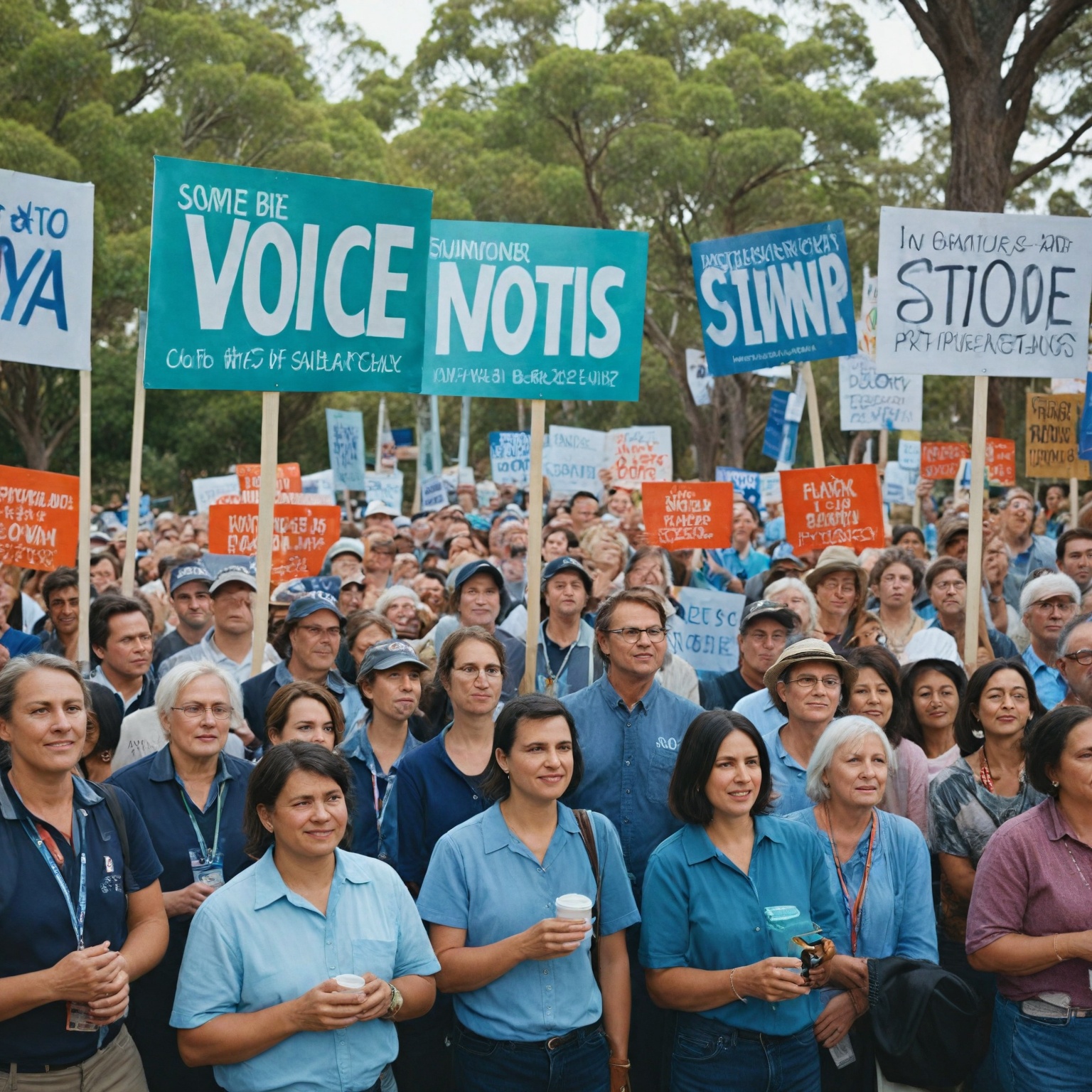
Indigenous affairs and representation remain significant campaign topics. The Indigenous Voice to Parliament, first proposed in the 2017 Uluru Statement from the Heart and supported by Labor, has drawn both bipartisan support and contention. Indigenous leaders and activists continue to push for constitutional recognition and reforms through a potential referendum, highlighting the ongoing importance of Indigenous issues in national political discourse.
Other notable themes include healthcare improvements such as expanded Medicare Urgent Care Clinics, and business policies focusing on prosperity and wage protections. The Coalition has pledged to ban certain worker contract clauses that suppress wages, targeting low-paid employees, while debates between political leaders have underscored alternative approaches to business growth and economic stability.
Campaign Strategies and Tactics
Federal election campaigns in Australia have become increasingly complex and multifaceted, with parties and candidates employing a range of strategies and tactics to engage voters amid a turbulent economic and political landscape. Central themes dominating the campaigns include the ongoing cost-of-living crisis and global economic uncertainties, particularly those stemming from international trade tensions such as tariffs imposed during the Trump administration.
Parties emphasize targeted messaging on pressing issues like climate change, health, and economic support, with several independents and smaller parties advocating for long-term adaptation strategies and enhanced community support in response to extreme weather events. The major parties focus heavily on the cost of living, promising to prioritize government expenditure on essential services while eliminating less impactful or activist-focused programs.
Digital campaigning plays a critical role, with parties investing substantial sums in online advertising across platforms like Facebook, Google, and YouTube. For instance, the Liberal Party has spent over $100,000 on Facebook ads within a three-month period, aiming to associate themselves with key policy achievements such as the accelerated vaccine rollout and to mobilize donations and support. Political marketing experts highlight the importance of early voter engagement through these channels, noting that platforms like Meta (Facebook) effectively reach younger voters, while Google targets an older demographic.
Transparency and data use in campaigns have also come under scrutiny, as both major parties have historically utilized secretive databases to store private voter information for targeted outreach, raising concerns about privacy and the ethics of political data management.
Debate formats have expanded to include not only major party leaders but also minor party and independent candidates, with events hosted by major media outlets and specialized programs to increase voter exposure to a wider range of political voices. On-the-ground, traditional campaign structures remain vital, with local party branches and electorate conferences coordinating grassroots efforts and candidate communications.
The electoral contest is further complicated by the significant presence of minor parties such as the Greens, One Nation, and United Australia, alongside independents competing in key marginal seats. This diversification requires campaigns to tailor messages carefully to local electorates and demographic groups, such as the Chinese-Australian community, whose voting patterns could influence the outcome in several critical districts.
In addition to direct voter engagement, government-funded advertising campaigns also play a significant role. For example, a $13 million “Positive Energy” campaign promotes Australia’s emissions reduction efforts, with defenders arguing it counters misinformation and highlights the country’s solar energy uptake.
Collectively, these strategies and tactics reflect a dynamic and competitive federal election environment, where digital innovation, issue-focused messaging, and targeted voter outreach combine to shape Australia’s democratic process.
Notable Federal Election Campaigns
The landscape of Australian federal elections has evolved significantly over recent decades, marked by a diversification of political representation and the rise of influential independent candidates. The most recent federal election underscored this shift, with a record number of 16 independents and minor parties securing seats on the crossbench, alongside 10 senators outside the major parties.
A defining feature of recent campaigns has been the emergence of the “teal independents”—candidates blending classical liberal and environmentalist values, symbolized by the colour teal. These candidates notably contested traditionally safe Liberal seats such as Curtin, Goldstein, Kooyong, Mackellar, North Sydney, and Wentworth, inspired in part by the campaigns of incumbent independents like Zali Steggall and Rebekha Sharkie. Their campaigns have focused on issues such as addressing the climate emergency, investing in public education, healthcare, and scientific research, as well as promoting societal equity and liberty.
The cost-of-living crisis and global economic uncertainty have also been central to recent federal election campaigns, with economic challenges exacerbated by factors like international tariffs drawing considerable attention. Alongside major party contests, the influence of smaller parties such as the Greens, One Nation, and United Australia has grown, further diversifying the electoral contest and broadening policy debates.
The growing prominence of independents is not entirely new but has become more pronounced over time. Ted Mack’s election in 1990 marked the first independent breakthrough in federal parliament, paving the way for an increasing number of non-major party representatives to gain traction. More recently, concerns about immigration and population growth—closely tied to housing affordability—have emerged as significant electoral issues, contributing to the success of independents, particularly the teal candidates.
Indigenous affairs have also featured prominently in the political discourse surrounding federal elections, especially with the 2023 Australian Indigenous Voice referendum. The referendum, proposed in the 2017 Uluru Statement from the Heart and supported by the Labor Party in its 2022 platform, initially attracted some bipartisan support but ultimately was rejected by 60% of voters. This issue highlighted divisions within parties and among the electorate, influencing campaign dynamics in the parliamentary term leading up to and following the referendum.
In sum, recent Australian federal election campaigns have been characterized by a diversification of political actors, emergent issue-driven independents, and complex socio-political debates that extend beyond traditional party lines, reflecting broader societal shifts and concerns.
Public Engagement and Opinion
Public engagement in Australia’s federal election campaigns reflects a complex interplay of voter concerns, demographic influences, and campaign dynamics. Campaigning plays a crucial role in the election process, allowing candidates and parties to communicate their platforms and persuade voters. The issues that dominate public attention often shift over time, shaped by both current events and long-term trends.
One of the most prominent voter concerns since the 2022 federal election has been the issue of crime. Data from Roy Morgan indicates that the importance of “reducing crime and maintaining law and order” has risen sharply among supporters of all major parties across all states and territories between mid-2022 and late 2024. This growing focus on crime has already influenced election outcomes, such as in the 2023 Queensland Election. Alongside crime, other ongoing challenges influencing public opinion include the cost-of-living crisis and global economic uncertainties, particularly those related to international trade policies like tariffs imposed during the Trump administration. These economic issues are expected to shape the federal election campaigns significantly, as parties seek to demonstrate their responsiveness to voters’ concerns about opportunity and quality of life.
Demographic factors also play a significant role in shaping electoral preferences. Analysis of the Australian Election Study (AES) data from 1987 to 2022 reveals that women and younger voters generally lean toward left-of-centre parties. However, the salience of specific issues can alter voting patterns in any given election. For example, while issues like the Goods and Services Tax (GST) dominated the 1998 election, they became largely irrelevant by 2004. More recently, topics such as the environment, health, and Medicare have been particularly influential in driving voter behavior across age groups.
Beyond the major parties, smaller parties and independent candidates also contribute to the electoral landscape, engaging voters in key seats and broadening the range of issues discussed during campaigns. This diversity in candidates and issues underscores the dynamic nature of public engagement in Australia’s federal elections.
Controversies and Media Coverage
The 2023 Australian federal election campaigns were marked by significant controversies and extensive media coverage. One notable aspect was the use of secretive databases by both major parties, the Liberals and Labor, to store private information on voters. This practice raised concerns about privacy and data usage, although some insiders suggested it was an expected part of political campaigning. Media outlets, including ABC NEWS, dedicated efforts to uncovering the hidden strategies behind voter targeting, highlighting how and why certain demographics were being approached during the election period.
Media coverage also focused on the high-profile debate moderated by A Current Affair host Ally Langdon, where journalists from Nine Entertainment’s media companies—Charles Croucher from 9News, Deb Knight from 2GB, and Phil Coorey from the Australian Financial Review—posed questions to party leaders. This event drew significant public attention and was a critical platform for leaders to address key election issues.
Another source of controversy involved government spending on election-related advertising. While party political ads set the tone for campaign messaging, they were overshadowed by substantial
Policy Impacts of Election Campaigns
Federal election campaigns in Australia are increasingly shaped by pressing economic and social issues, with the ongoing cost-of-living crisis and rising global economic uncertainty at the forefront. These factors, including the impact of tariffs imposed by the Trump administration, have driven parties to focus their platforms on economic stability and affordability. Campaigning plays a critical role in allowing candidates and parties to present their policy proposals and justify why voters should support them.
Recent changes to government infrastructure demonstrate the evolving policy landscape, including the establishment of the National Anti-Corruption Commission in July 2023, the launch of the Housing Australia Future Fund in November 2023, the replacement of the Administrative Appeals Tribunal with the Administrative Review Tribunal in October 2024, and the passage of the Online Safety Amendment Bill in November 2024. These reforms reflect the government’s response to public concerns and shape the context in which election campaigns occur.
Housing affordability remains a central issue in the political debate, exacerbated by rising rents and property prices. In response, major parties have proposed ambitious housing policies such as building one million new affordable homes through partnerships with states, territories, and private developers under the National Housing Accord, as well as expanding the Help to Buy scheme to assist first-home buyers. Economic strategies by parties like Labor also heavily integrate climate policy, emphasizing a transition to 100% renewable energy through the phasing out of coal and gas industries, alongside introducing wealth taxes on billionaires and large corporations to fund social programs.
The Australian Greens have further advanced climate-related policies with the introduction of a comprehensive Polluter Pays bill. This legislation aims to hold major polluters legally responsible for the costs associated with climate disasters. Their approach underscores the importance of reducing national risk exposure by assisting households to relocate from high-risk areas and preventing new developments in such locations. The Greens also highlight the dual challenge of making insurance more affordable while avoiding incentives for settlement in vulnerable regions.
Together, these policy proposals and government reforms illustrate how election campaigns not only influence voter decisions but also drive substantive shifts in public policy, particularly around economic management, housing, and climate change mitigation. These issues are expected to dominate the discourse as parties continue to refine their platforms throughout the election cycle.
Future Outlook
The upcoming federal election in Australia is expected to be shaped by several critical factors influencing both campaign strategies and voter priorities. One significant consideration is the scheduling of elections to avoid overlap and voter confusion. In particular, the Western Australian state election is set for 8 March 2025, and holding the federal election on the same day would necessitate rescheduling the state election, which is generally regarded as undesirable. To prevent overlapping campaigns and ensure clear electoral focus, it is anticipated that the federal election will be called after the state election concludes.
Campaign issues are likely to be dominated by ongoing economic challenges, notably the cost-of-living crisis and global economic uncertainties, including the impacts of tariffs imposed by the previous U.S. administration. These factors are expected to heavily influence voter sentiment and party messaging. Additionally, climate policy remains a pivotal topic, with reports outlining the scientific imperatives and credible policy approaches necessary in the next parliamentary term. Parties are expected to address these concerns through detailed policy proposals, as exemplified by Labor’s plans for a “better future” articulated by leader Anthony Albanese.
The evolving political landscape, highlighted by the record number of independents and minor parties elected to the crossbench and Senate in recent elections, suggests a continuing shift away from traditional two-party dominance. This pluralistic environment will likely affect preference deals and voting strategies, with parties recommending how-to-vote preferences that reflect new alliances and voter bases. For instance, the Liberal National Party in Queensland has directed preferences to One Nation, while the Greens have recommended preferences to Labor and certain independents associated with the Voices groups in key electorates.
The content is provided by Blake Sterling, News Scale