Summary
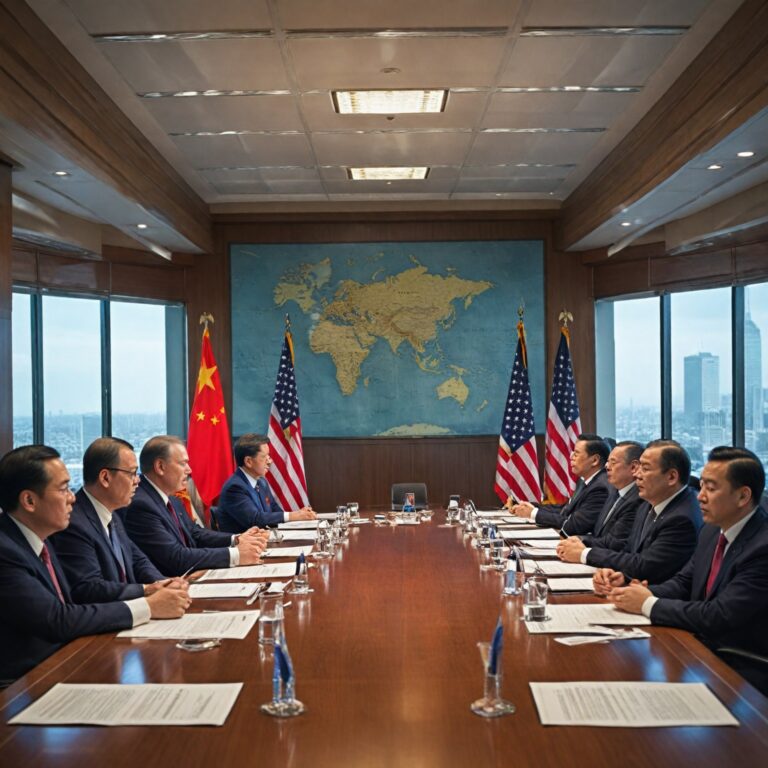
**Navigating the Unpredictable Waves of the US Economy: Trade Policy Impact** examines the complex and evolving relationship between U.S. trade policy and the nation’s economic fluctuations. Historically, American trade policy has shifted through distinct phases—from early tariff-driven revenue models, through protectionist strategies surrounding the Civil War, to mid-20th century liberalization efforts emphasizing reciprocal agreements. These shifts reflect broader economic, political, and geopolitical forces that have shaped the United States’ approach to international trade, influencing industrial competitiveness, employment, and national security.
The topic is notable for its profound impact on the U.S. economy, particularly regarding persistent trade deficits, sectoral disruptions, and the political debates they spark. Recent decades have seen intensified scrutiny of free trade policies, especially following the “China shock” after China’s 2001 entry into the World Trade Organization, which contributed to substantial manufacturing job losses and heightened political polarization. Empirical research highlights mixed effects of tariff measures: while tariffs can modestly reduce trade deficits, they often lead to slower economic growth, unintended employment consequences, and retaliatory trade actions that complicate their efficacy.
Trade policy formulation involves a multifaceted set of actors, including the executive branch, Congress, the judiciary, and private sector stakeholders, each influencing policy amid economic instability and global uncertainty. The interplay of these actors, combined with evolving geopolitical tensions—such as competition with China and concerns over supply chain resilience—has heightened the strategic importance of trade policy beyond purely economic considerations. Concurrently, debates persist over the balance between protectionism and liberalization, the role of industrial policy, and the integration of environmental and security priorities.
Looking forward, U.S. trade policy faces the challenge of adapting to a “less efficient” global economic environment that prioritizes trust, redundancy, and sustainability alongside traditional goals of competitiveness and growth. Climate considerations, technological dependencies, and geopolitical rivalries will continue to shape policy decisions, necessitating flexible approaches that reconcile domestic economic resilience with international trade realities. This evolving landscape underscores the critical role of trade policy as a dynamic tool for navigating the unpredictable waves of the U.S. economy.
Historical Overview of Economic Fluctuations in the United States
Economic fluctuations in the United States have been closely intertwined with shifts in trade policy throughout its history. Scholars often divide U.S. trade policy into three distinct periods, each characterized by different policy objectives and external shocks. The first period, from 1790 to 1860, focused primarily on raising government revenue through tariffs. The second period, from 1861 to 1933, was marked by a strategy of restricting imports, largely triggered by the economic and political upheavals surrounding the Civil War. The third period, spanning 1934 to 2016, emphasized pursuing reciprocity agreements to foster more balanced trade relationships, a shift prompted by the Great Depression and evolving global economic conditions.
The economic consequences of trade policy are exemplified by the persistent U.S. trade deficit, which reached $1.2 trillion in 2024. This deficit reflects decades of job losses, diminished innovation, and erosion of wealth and security due to foreign countries’ use of unfair and non-reciprocal trade practices that disadvantage domestic producers. The recent era has seen renewed scrutiny of free trade, particularly following what is termed the “China shock”—a rapid surge in imports from China after its accession to the World Trade Organization in 2001. This influx led to significant declines in U.S. manufacturing jobs, factory closures, and economic distress in many industrial regions, fueling backlash against previous trade liberalization policies.
Empirical studies have further illuminated the impact of trade policy on the economy. For instance, an International Monetary Fund (IMF) paper from January 2024 found that unexpected tariff shocks typically reduce imports more than exports, marginally lowering the trade deficit but causing persistent gross domestic product (GDP) losses. Specifically, reversing the 2018–2019 tariffs could increase U.S. output by 4 percent over three years. Another study by David Autor and colleagues concluded that the 2018–2019 tariffs did not significantly boost employment in protected sectors but did cause negative employment effects in industries facing foreign retaliation, especially agriculture. Earlier IMF research in 2019 similarly projected that a 25 percent tariff hike on all trade between China and the U.S. would result in substantial economic losses for both countries.
Agriculture has consistently been sensitive to trade policy shifts due to its export-driven nature. Key U.S. agricultural commodities such as soybeans, corn, and pork are heavily dependent on international markets. Policies that restrict market access or impose tariffs can therefore directly undermine farmers’ incomes and regional economic stability. Given these dynamics, maintaining diversification across sectors remains a critical strategy for mitigating the volatility associated with changing trade policies and capturing long-term economic opportunities.
Political Actors Shaping Trade Policy During Economic Instability
Trade policy in the United States is shaped by a complex interplay of political actors across the executive, legislative, and judicial branches, especially during periods of economic instability. These actors influence not only the formulation but also the implementation and enforcement of trade measures that affect the national economy and international relations.
Executive Branch and Key Agencies
The executive branch plays a central role in directing U.S. trade policy. The President, often through the United States Trade Representative (USTR) and the Secretary of Commerce, leads negotiations, enforces trade laws, and responds to economic threats. For instance, under the authority granted by laws such as the International Emergency Economic Powers Act (IEEPA) and the Trade Act of 1974, the President can implement tariffs and other trade restrictions deemed necessary to protect national security and economic interests during crises. Coordination among various cabinet members—including the Secretaries of State, Treasury, Homeland Security, and Defense—is essential to ensure a cohesive approach to trade policy that balances economic, security, and diplomatic considerations.
The USTR holds a pivotal position in trade policy, serving as the President’s senior representative on international economic matters. Legislative developments, such as the 1988 amendments to trade laws, elevated the USTR’s status, assigning it responsibility for enforcing trade actions under Section 301 and ensuring that trade agreements align with domestic economic priorities. The USTR also conducts regular reviews of trade agreements to safeguard American workers and manufacturers, reinforcing the administration’s strategic approach to trade policy amid global uncertainties.
Legislative Influence and Congressional Dynamics
Historically, Congress has played a significant role in shaping trade policy, setting broad directions, and delegating negotiation authority to the executive branch. While the negotiation of trade deals often falls under presidential purview, Congress influences trade policy through its legislative powers, oversight, and budgetary control. The complexity of congressional decision-making frequently results in trade policies reflecting diverse economic interests rather than strict partisan alignments. Vote trading among legislators representing various constituencies has contributed to protectionist measures that aim to shield domestic industries.
This dynamic underscores the political reality that trade policy is not solely determined by economic theory but also by competing regional and sectoral interests within the country. Such influences can lead to policies that favor protectionism or industrial support measures during periods of economic instability, as legislators seek to mitigate adverse impacts on their constituencies.
Judicial Role in Trade Policy Enforcement
The judiciary, particularly specialized bodies such as the U.S. Court of International Trade and the U.S. Court of Appeals for the Federal Circuit, adjudicates disputes related to trade policy enforcement. These courts hear appeals from administrative agencies like the U.S. International Trade Commission (USITC) and the Patent Trial and Appeal Board, ensuring legal compliance and fairness in trade-related rulings. The judicial branch thus acts as a critical check on executive and legislative actions, resolving conflicts that arise from trade policy implementation during turbulent economic periods.
Private Sector and Policy Influence
Beyond government institutions, private sector stakeholders actively engage in shaping trade policy by lobbying and providing expertise. Industry representatives and economic interest groups communicate their concerns and priorities to policymakers, seeking to influence negotiations and regulatory decisions. This interaction highlights the importance of political economy considerations in trade policymaking, especially when economic instability heightens the stakes for domestic industries reliant on global trade flows.
Strategic Considerations and Macroeconomic Context
The efforts of political actors to influence trade policy occur within a broader macroeconomic context. Effective trade policy requires not only tariffs and trade barriers but also supportive macroeconomic strategies such as exchange rate management and fiscal and monetary policies that address trade imbalances. Policymakers must balance the goal of protecting domestic sectors with maintaining the overall stability and openness of the economy to international commerce.
Moreover, as global conditions evolve, policymakers face challenges in reconciling traditional free trade paradigms with emerging priorities such as supply chain resilience, economic security, and sustainable development. This ongoing negotiation reflects the adaptive nature of trade policy in response to both domestic political pressures and international economic shifts.
In sum, trade policy during economic instability is shaped by a multifaceted set of political actors operating within institutional frameworks that reflect both economic imperatives and political realities. Their interactions determine the direction and effectiveness of trade measures that influence the U.S. economy’s resilience and global competitiveness.
Evolution of Trade Policy Framework in the United States
The evolution of U.S. trade policy has been shaped by a complex interplay of domestic economic interests, global events, and changing political dynamics. During the 19th century, tariff rates experienced significant fluctuations, with average tariffs on dutiable imports peaking at over 60 percent around 1830 before falling to less than 20 percent by the Civil War. This period was notable for one of the few secular declines in tariffs in American history, reflecting shifting political economy factors influencing trade policy decisions.
In the early 20th century, the United States adopted more interventionist measures exemplified by the Smoot–Hawley Tariff Act of 1930, which raised tariffs during a period of global economic downturn. However, a major policy shift occurred with the Reciprocal Tariff Act of 1934, which delegated authority to the executive branch to negotiate bilateral tariff reduction agreements. This marked a transition toward trade liberalization and multilateralism, a trajectory further cemented by seven tariff reduction rounds between 1948 and 1994.
Post-World War II trade policy was initially based on assumptions that U.S.-led liberalization would prompt global economic convergence and increased consumption abroad, thereby benefiting the American economy. However, these assumptions proved flawed as persistent trade imbalances and deficits emerged. Nonetheless, domestic manufacturers supported trade agreements during this period as a strategy to access foreign markets once wartime competition had subsided.
From the late 20th century into the 21st century, the U.S. expanded its trade framework by negotiating a mix of multilateral, regional, and bilateral trade agreements. Presently, the United States maintains 14 comprehensive trade agreements with 20 countries, reflecting an ongoing effort to modernize these agreements to better align with American economic interests and address underlying trade imbalances. These agreements have been complemented by active involvement from various government agencies, with the Office of the U.S. Trade Representative (USTR) playing a central role in negotiating and implementing trade policy alongside other federal bodies.
Recent shifts in trade policy, including changes in tariffs and trade agreement terms, continue to influence the U.S. economic landscape, affecting industries reliant on international trade and altering competitive dynamics. Trade policy remains a critical tool for balancing domestic economic priorities with global trade realities in an increasingly interconnected world.
Partisan Dynamics and Public Opinion in Trade Policy Formation
Trade policy formation in the United States has been influenced by complex partisan dynamics and evolving public opinion, shaped by both economic interests and broader political factors. Votes on trade measures, such as tariff increases, have not adhered strictly to partisan lines. Instead, research indicates that nonpartisan vote trading—or log-rolling—among different economic constituencies played a significant role, with Congressional decision-making structures often favoring protectionist interests seeking tariffs to shield domestic industries. This suggests that the political process around trade policy is shaped by a mixture of economic self-interest and institutional incentives rather than purely ideological divisions.
Moreover, the economic disruptions caused by the so-called “China shock”—the rapid expansion of Chinese imports following its accession to the World Trade Organization in 2001—have heavily influenced public opinion and political polarization related to trade. Regions most adversely affected by increased competition from China have seen heightened political polarization, which analysts argue contributed to the rise of populist movements and figures such as former President Donald Trump. This polarization has intensified concerns over the fairness and consequences of globalization, prompting a reevaluation of trade policies in the U.S.
In addition to economic concerns, national security considerations have increasingly factored into trade policy debates. Policymakers worry about Chinese efforts to disseminate disinformation and collect sensitive information on American citizens, adding a security dimension to trade discussions. Such concerns have reinforced calls for trade policies that prioritize domestic manufacturing and labor protections.
Public sentiment and business confidence have also been affected by trade policy uncertainty. For example, studies have shown that tariff increases not only impose direct economic costs but also generate negative sentiment shocks, which can amplify their adverse impact on GDP growth both domestically and globally. This interplay between economic realities and public perception underscores the delicate balance policymakers must strike in navigating trade issues.
International Relations and Geopolitical Influences on Trade Policy
U.S. trade policy has been profoundly shaped by international relations and geopolitical developments over recent decades. The rise of East Asia’s economic powerhouses, notably Japan and China, alongside the dissolution of the Soviet Union, have significantly influenced the strategic direction and priorities of American trade initiatives. Major global events such as the signing of the North American Free Trade Agreement (NAFTA), the 2007–09 Great Recession, and subsequent presidential administrations have further contributed to evolving trade policies that reflect both economic and geopolitical considerations.
The interplay between national security and trade has become increasingly salient, particularly amid rising armed conflicts abroad and growing concerns over economic vulnerabilities. Policymakers have recognized that trade imbalances and structural deficiencies in the global trading system can pose direct risks to military readiness and the nation’s security posture. This recognition has led to a shift in trade policy focus toward reciprocity and addressing unfair trade practices, as emphasized in recent executive directives aimed at investigating persistent trade deficits and their broader implications for economic and national security.
In addition to bilateral and multilateral trade agreements, contemporary U.S. trade strategy involves ongoing consultations centered on enhancing regional economic institutions, strengthening supply chains, and fostering sustainable trade practices. These efforts include initiatives aimed at creating clean energy jobs, advancing decarbonization, and promoting inclusive economic growth among trading partners, reflecting a broader geopolitical strategy that intertwines economic objectives with environmental and social considerations.
The competition with China remains a dominant geopolitical factor affecting trade policy. The so-called “second China shock,” characterized by a surge in Chinese exports in sectors such as electric vehicles and solar panels, has intensified political and economic tensions. This competition has had domestic repercussions, including increased political polarization in regions heavily affected by Chinese trade competition, which some analysts link to the rise of populist political movements. Moreover, concerns about Chinese disinformation campaigns and efforts to collect sensitive information have heightened the national security dimension of trade policy.
Economic Impacts of Trade Policy Decisions
Trade policy decisions in the United States have wide-ranging effects on the domestic economy, influencing sectors differently and shaping broader economic trends. While tariffs and trade restrictions are often employed to protect key industries and address trade imbalances, their efficacy and consequences are complex and multifaceted.
Macroeconomic policies play a crucial role in addressing trade deficits, as reducing damaging deficits cannot be achieved solely through trade policy. Extreme trade restrictions that essentially halt international trade would cause severe disruption to the U.S. economy. Instead, a combination of exchange rate management to realign an overvalued U.S. dollar and a balanced mix of fiscal and monetary policies are necessary to achieve more balanced trade outcomes. Tariffs are only one tool within a broader industrial policy toolkit and must be supported by complementary policies to effectively boost domestic sectors, especially when trading partners engage in market-distorting subsidies.
Tariffs can help sustain key industries and counteract foreign market distortions, thereby improving economic efficiency. They also address national security concerns, mitigate underinvestment in supply chain resilience, and combat monopolization of essential inputs by foreign countries—lessons underscored during the COVID-19 pandemic when domestic shortages of personal protective equipment and critical medicines became apparent. However, tariffs have limitations and can impose significant costs. For example, the average tariff-related tax increase
Detailed Case Studies of Trade Policy during Economic Waves
Trade policy in the United States has undergone significant shifts in response to evolving economic waves, often reflecting a complex interplay between domestic priorities and international pressures. A notable example is the trade tensions and tariff implementations during the late 2010s and early 2020s, which illustrate both the intended and unintended consequences of such policies.
During the Trump administration, tariffs were employed as a strategic tool aimed at reducing the large and persistent U.S. goods trade deficits, particularly with China. These tariffs sought to protect domestic industries by imposing taxes on imported goods, thereby encouraging domestic production and addressing concerns about unfair trade practices. However, empirical studies have shown that these tariff measures produced mixed results. A January 2024 International Monetary Fund (IMF) paper found that while tariffs did reduce imports more than exports, the trade deficit shrank only slightly and was accompanied by persistent losses in gross domestic product (GDP). Additionally, research by David Autor and colleagues concluded that the tariffs had minimal positive impact on employment in protected sectors but caused notable negative employment effects in retaliatory-affected areas such as agriculture.
China’s retaliatory tariffs, reaching as high as 84% on U.S. imports, escalated the trade conflict, imposing an estimated $400 billion tax burden on U.S. households and businesses before accounting for substitution effects. This reciprocal escalation underscored the broader risks associated with trade wars, including disruptions to global supply chains and downward pressures on global economic growth. Analysts noted that as tariff negotiations increasingly focused on structural economic issues beyond simple border measures, the likelihood of prolonged tariffs—and their attendant economic uncertainties—grew.
The implications of these trade policies extend beyond economic metrics to national security concerns. The persistent U.S. trade deficits have contributed to a decline in domestic manufacturing capacity in critical and advanced sectors, thereby weakening economic resilience and military readiness amid rising global conflicts. This strategic vulnerability prompted the declaration of a national emergency and the initiation of the “America First Trade Policy” in early 2025, which mandated a thorough investigation into the causes and consequences of trade deficits and unfair trade practices by other countries.
Moreover, the broader historical context of U.S. trade policy reveals a long-standing emphasis on reciprocity, dating back to the 1930s. This principle has shaped bilateral and multilateral trade agreements designed to secure balanced tariff reductions. However, recent global economic developments—such as the rise of East Asian economic powers, the Great Recession, and shifts in geopolitical alignments—have complicated the pursuit of reciprocal trade, demanding more nuanced and multifaceted policy responses.
Economic Indicators and Analytical Tools for Trade Policy Assessment
Trade policy assessment relies on a variety of economic indicators and analytical tools to evaluate the impact of trade measures across different sectors and regions. Trade trends and statistics are collected at multiple levels of aggregation, offering insight into the application and consequences of trade policies on both economic sectors and geographic areas. These data serve as a foundation for understanding how unilateral trade preferences and multilateral agreements affect trade volumes and economic performance.
One key element in trade policy assessment involves reviewing the effects of trade agreements on federal procurement and domestic economic interests. For example, the United States Trade Representative, in coordination with the Senior Counselor for Trade and Manufacturing, conducts reviews of trade agreements—including the World Trade Organization Agreement on Government Procurement—to ensure that implementation favors domestic workers and manufacturers, as outlined in Executive Order 13788 (Buy American and Hire American). Such reviews highlight the intersection of trade policy with domestic economic goals.
Historical analysis of U.S. trade policy further supplements contemporary assessments. Research conducted through institutions like the National Bureau of Economic Research (NBER) investigates the economic effects of past trade policies on the American economy, helping to contextualize current trends and policy decisions. These historical perspectives provide critical data for understanding long-term impacts on sectors such as agriculture, where the U.S. experienced a trade surplus in earlier years that has since dissipated.
Analytical tools used in assessing trade policy impacts extend beyond simple trade deficit measurements. While reducing trade deficits is often a stated goal, experts emphasize that tariffs alone are insufficient for achieving balanced trade. Instead, macroeconomic policies—including exchange rate management and a strategic mix of fiscal and monetary policies—are necessary complements to trade measures. This comprehensive approach recognizes the multifaceted nature of trade dynamics and the limitations of tariffs as a standalone tool.
Recent empirical studies employ advanced economic modeling to evaluate the effects of tariff shocks and trade barriers. A January 2024 International Monetary Fund (IMF) paper found that unexpected tariff shocks generally reduce imports more than exports, resulting in marginal decreases in trade deficits but persistent losses in gross domestic product (GDP). The IMF estimated that reversing the tariffs imposed during 2018–2019 could increase U.S. output by 4 percent over three years. Similarly, research by David Autor and colleagues concluded that these tariffs did not significantly benefit employment in protected sectors and noted that retaliatory measures caused negative employment impacts, especially in agriculture. Earlier IMF research using general equilibrium models also predicted substantial economic losses for both the U.S. and China resulting from increased tariffs on bilateral trade.
Together, these indicators and analytical methodologies provide policymakers with a nuanced understanding of trade policy outcomes. They underscore the importance of integrating trade data, historical insights, and economic modeling to craft policies that support domestic economic objectives while mitigating adverse effects.
Policy Responses to Economic Unpredictability
Policy responses to the economic unpredictability caused by shifts in U.S. trade policy have been multifaceted, reflecting the complexity of balancing domestic economic interests with global trade dynamics. Historically, from 1947 through 1994, the United States engaged in multiple rounds of negotiations under the General Agreements on Tariffs and Trade (GATT), aiming to liberalize tariffs and non-tariff barriers. However, these efforts were based on three key assumptions: that other countries would follow U.S. leadership in liberalization, that this would lead to economic convergence and increased domestic consumption abroad, and that the U.S. would avoid persistent goods trade deficits. These assumptions ultimately proved incorrect, contributing to unbalanced trade relationships, particularly between the United States and its trading partners.
Economists have played a critical role in shaping trade policy, generally advocating for free trade and the reduction of trade barriers. Despite the political challenges embedded in trade negotiations, Western economists and policymakers largely oppose the adoption of an industrial policy that attempts to pick economic “winners and losers,” arguing that such policies would be vulnerable to political pressures and likely to fail under the U.S. system.
Addressing damaging trade deficits through trade policy alone is considered insufficient and potentially harmful if pursued too aggressively. Extreme trade restrictions risk causing severe disruptions to the U.S. economy by essentially shutting down international trade. Instead, more balanced trade outcomes require a combination of macroeconomic strategies, including exchange rate adjustments to correct an overvalued U.S. dollar and a prudent mix of fiscal and monetary policies. Tariffs are only one tool within a broader industrial policy toolkit and must be supported by complementary measures to effectively enhance domestic industries.
Given the volatility that trade policy changes can generate, diversification remains a key strategic principle. While shifts such as new tariffs or revised trade agreements can reshape the economic landscape by influencing cross-border flows of goods and services, sectors resilient to tariff impacts offer long-term opportunities for investors and businesses alike.
Recent policy initiatives also emphasize ensuring that trade agreements support domestic workers and manufacturers. For example, the United States Trade Representative is tasked with reviewing the effects of trade agreements, including those under the World Trade Organization, to align with executive orders such as the Buy American and Hire American provisions. These reviews aim to ensure that international agreements do not disadvantage American economic interests, particularly in relation to key trading partners like the People’s Republic of China.
Criticisms, Debates, and Controversies Surrounding Trade Policy
Trade policy in the United States has long been a subject of intense debate and controversy, especially in light of recent shifts toward increased protectionism and scrutiny of trade deficits. Critics argue that the large and persistent U.S. goods trade deficits pose a significant threat to the national economy and security. This perspective was notably underscored by a 2025 presidential declaration of a national emergency, citing that these deficits stem from unfair trade practices by key trading partners, including non-tariff barriers such as technical regulations, inadequate intellectual property protections, and suppressed domestic wages and consumption abroad. The loss of domestic manufacturing capacity, particularly in critical and advanced industrial sectors, is seen as compromising both economic resilience and military readiness, exacerbated by ongoing global conflicts.
Economists and policymakers remain divided over the efficacy and consequences of protectionist measures. Since the 2016 presidential election, the U.S. has increasingly employed tariffs with the stated purposes of raising government revenue, restricting imports to shield domestic producers, and achieving reciprocity in trade agreements that reduce barriers. However, this approach has faced criticism for potentially undermining established multilateral and bilateral free trade agreements, which aim to eliminate trade barriers among participating countries—a strategy now considered under serious threat.
The complexity of modern trade policy is particularly evident in sectors like technology, where global supply chains are deeply interconnected. The U.S. depends heavily on Asia for the production of hardware components, despite designing much of the technology domestically. Policies that impose tariffs or export controls on these goods risk disrupting supply chains and innovation, with broader implications for competitiveness and economic growth.
Moreover, recent global events, including the COVID-19 pandemic and geopolitical tensions such as Russia’s invasion of Ukraine, have intensified discussions around supply chain resilience and the need for redundancy. U.S. trade representatives have acknowledged a shift toward a less efficient but more trusted economic system, where countries may pay a “premium” for reliability and insurance against unexpected disruptions. This evolving landscape challenges the neoliberal paradigm of globalization and free trade, fueling debates over how far the U.S. should recalibrate its trade policies to balance economic efficiency with national security and resilience.
Judicial and administrative processes also play a critical role in shaping and contesting trade policy. Appeals concerning international trade matters and related intellectual property disputes are handled by specialized courts, such as the U.S. Court of Appeals for the Federal Circuit, which reviews decisions from the U.S. International Trade Commission and other administrative bodies. This judicial oversight adds another layer of complexity to the implementation and enforcement of trade policies.
Future Outlook and Emerging Trends
The future of U.S. trade policy is poised to navigate a complex and evolving global economic landscape marked by heightened uncertainties and strategic recalibrations. One emerging trend is the recognition of a “less efficient world,” where economic actors increasingly place a premium on trust and redundancy in supply chains to mitigate disruptions caused by unforeseen events such as the COVID-19 pandemic and geopolitical conflicts like Russia’s invasion of Ukraine. This shift suggests a move away from the traditional neoliberal paradigm towards more resilient and diversified supply networks, though the extent and nature of this transformation remain subjects of ongoing negotiation and political contestation.
Climate considerations are becoming integral to trade policy discussions, with efforts to promote climate-friendly trade practices revealing deep-seated tensions between jurisdictions and sectors. Industries characterized by high carbon intensity, such as steel and automotive manufacturing, face particular scrutiny, leading to disagreements over mechanisms like the European Union’s Carbon Border Adjustment Mechanism (CBAM), the U.S.-EU Green Steel and Aluminum Agreement (GASSA), and other initiatives such as Germany’s climate club proposal. These debates highlight the challenge of balancing environmental objectives with economic growth, especially for middle-income countries reliant on carbon-intensive production methods.
Tariffs and industrial policies continue to play a strategic role in shaping the U.S. economic environment. Tariffs serve not only as negotiating tools but also as instruments to protect and develop key domestic industries, particularly in contexts where foreign competitors engage in export subsidization or monopolization of critical inputs. The COVID-19 pandemic underscored the importance of maintaining resilient supply chains for essential goods, prompting policymakers to reconsider the balance between globalization and domestic production capabilities. This perspective aligns with the broader strategic interest in safeguarding national security and addressing underinvestment in critical supply nodes.
Trade policy volatility, driven by tariff adjustments and shifting regulations, presents challenges and opportunities for businesses. The technology sector exemplifies this dynamic, as it relies heavily on global supply chains for hardware production while exporting software and services worldwide. Policy measures affecting intellectual property rights, data flows, and export controls have significant implications for innovation and competitiveness in this sector. Given these uncertainties, diversification remains a crucial strategy for firms seeking to navigate potential disruptions and capitalize on long-term growth prospects.
Looking ahead, the U.S. trade policy landscape will also be influenced by lessons from the post-war international economic order, which was predicated on assumptions about liberalization and reciprocal consumption patterns that have not fully materialized. This historical context informs current debates about the adequacy of existing frameworks and the need for policies that better reflect contemporary economic realities, including persistent trade imbalances and the strategic interests of domestic industries.
In sum, the future of U.S. trade policy will likely be shaped by an intricate interplay of economic resilience, environmental sustainability, geopolitical considerations, and strategic industrial support. Navigating these unpredictable waves will require adaptive policy approaches that balance competing priorities while fostering a robust and diversified economic base.
The content is provided by Sierra Knightley, News Scale